Serenity Sensorium
A Breathing Ecology
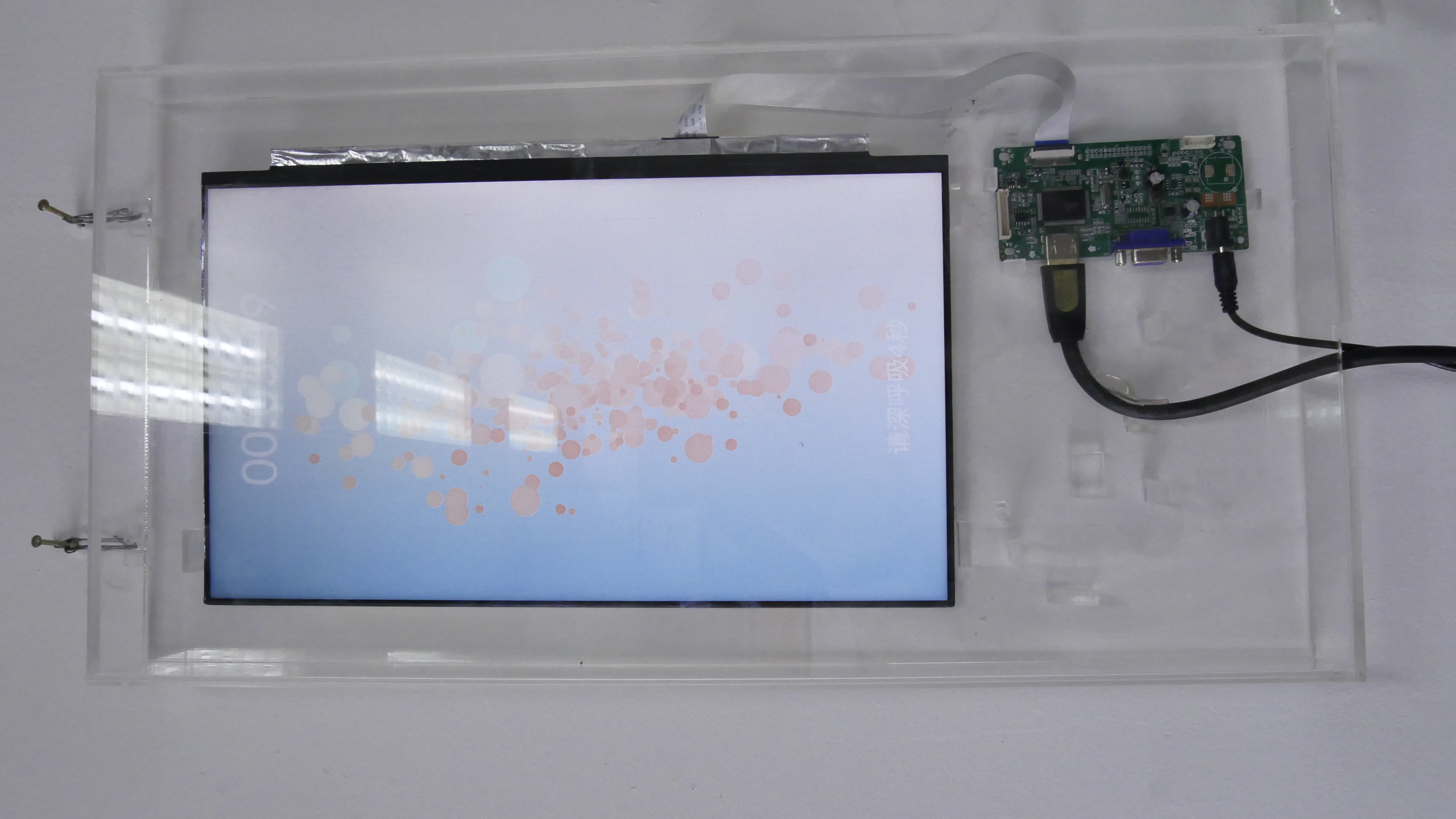
This research designs a multisensory digital system to guide people with anxiety toward calm through breath-meditation. The system links the breath of the human body with the breath of plants — forming a small breathing ecology where both negotiate, exchange, and synchronize.
Plants act as natural respondents. Their CO₂ exchange is detected by sensors and translated, in real time, into visual and physical motion on screens and servo modules. Visitors don't follow instructions — they follow rhythms.
Why Breath Meditation
Research on mindfulness-based therapies (Khoury et al., 2013) has shown that breath-focused meditation is particularly effective for relieving stress, anxiety, and depression. Among the many forms of mindfulness practice, this project chose breath meditation as the core element — because breathing is the one thing every visitor already knows how to do.
Unlike compulsory clinical interventions — medication, transcutaneous electrical stimulation, brainwave therapies — Serenity Sensorium works through indirect, non-verbal guidance. By removing the gaze of the therapist and the pressure of being observed, the work creates a foundation of trust on which a different kind of healing relationship can begin.
Plants as Therapeutic Companions
The American Horticultural Therapy Association's research has shown that approaching mental health through the metaphor of plants — through their care, growth, and quiet presence — has become a new direction in horticultural therapy.
In the hospital setting, simply being near plants has been shown to accelerate recovery and increase pain tolerance. Serenity Sensorium takes this further: visitors don't just look at plants, they breathe with them.
Three Innovations
How the System Works
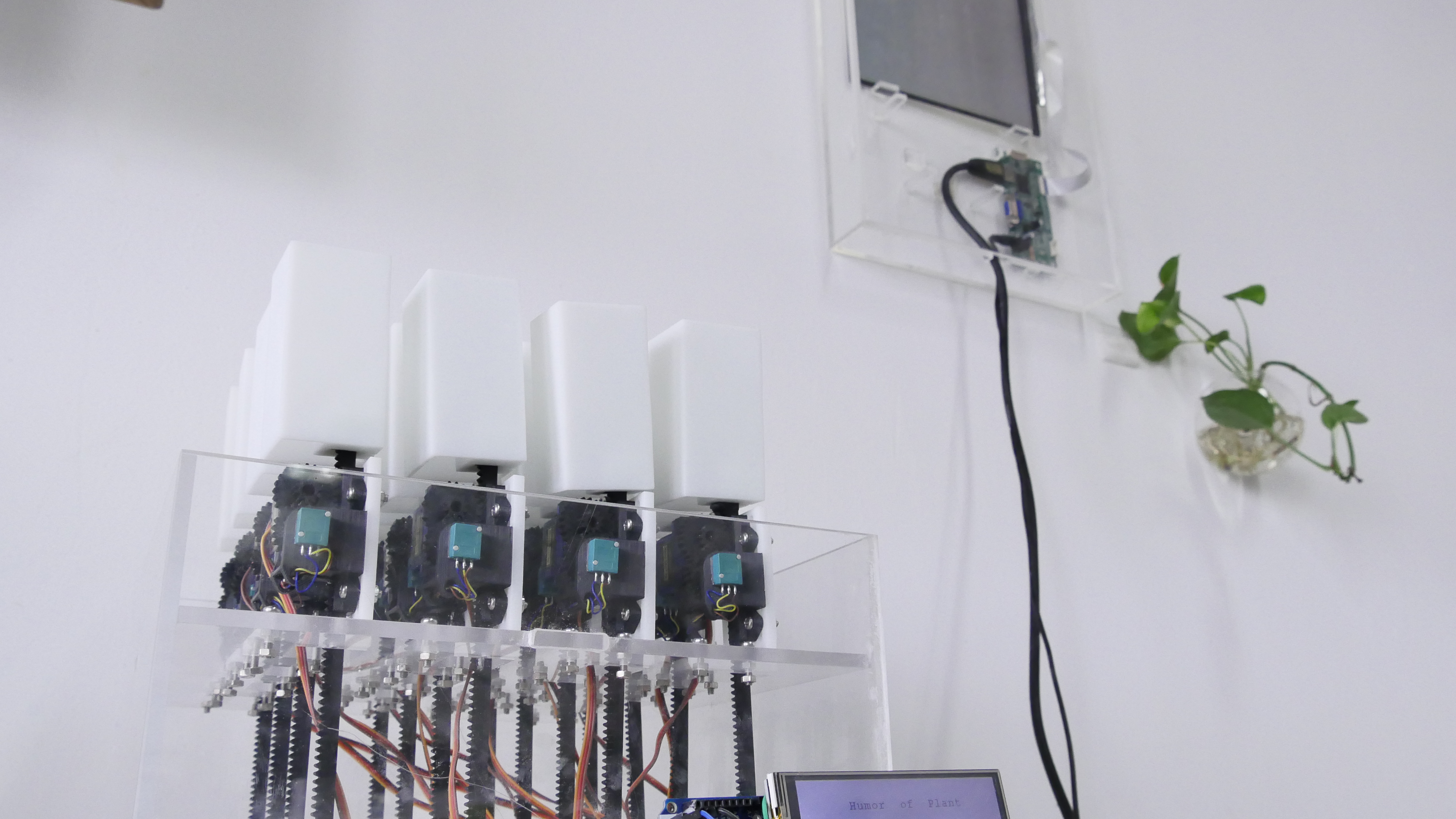
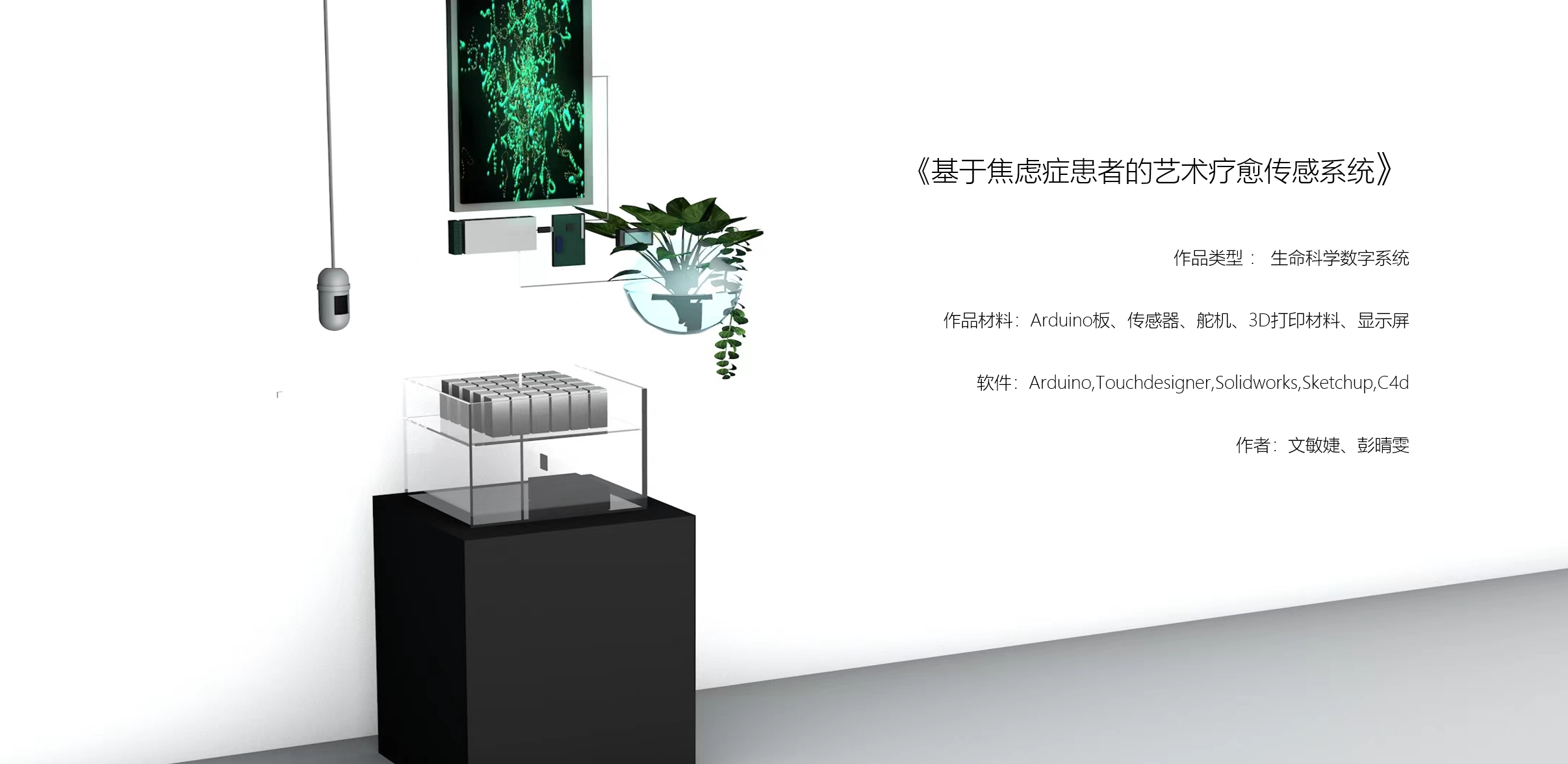
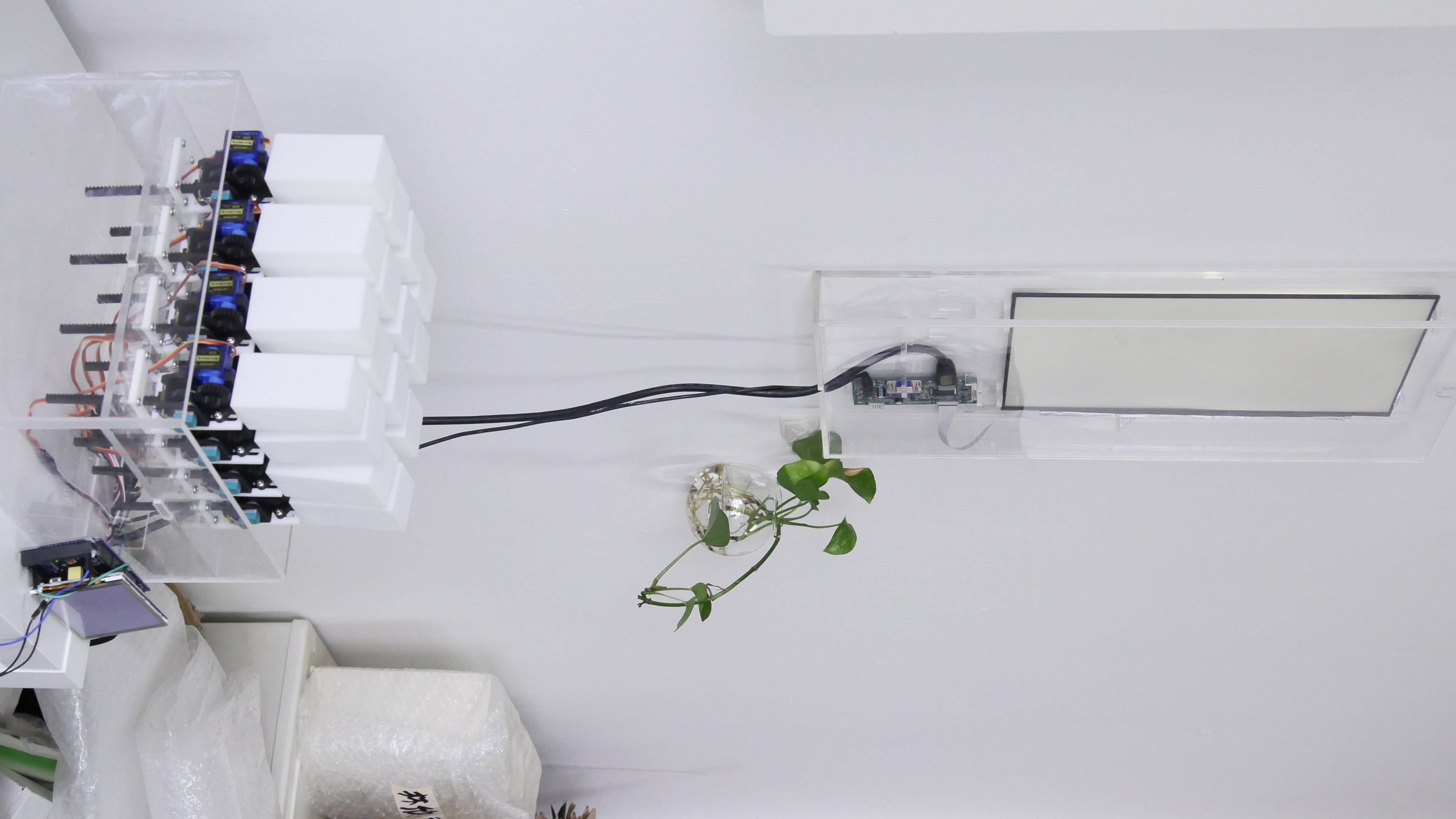
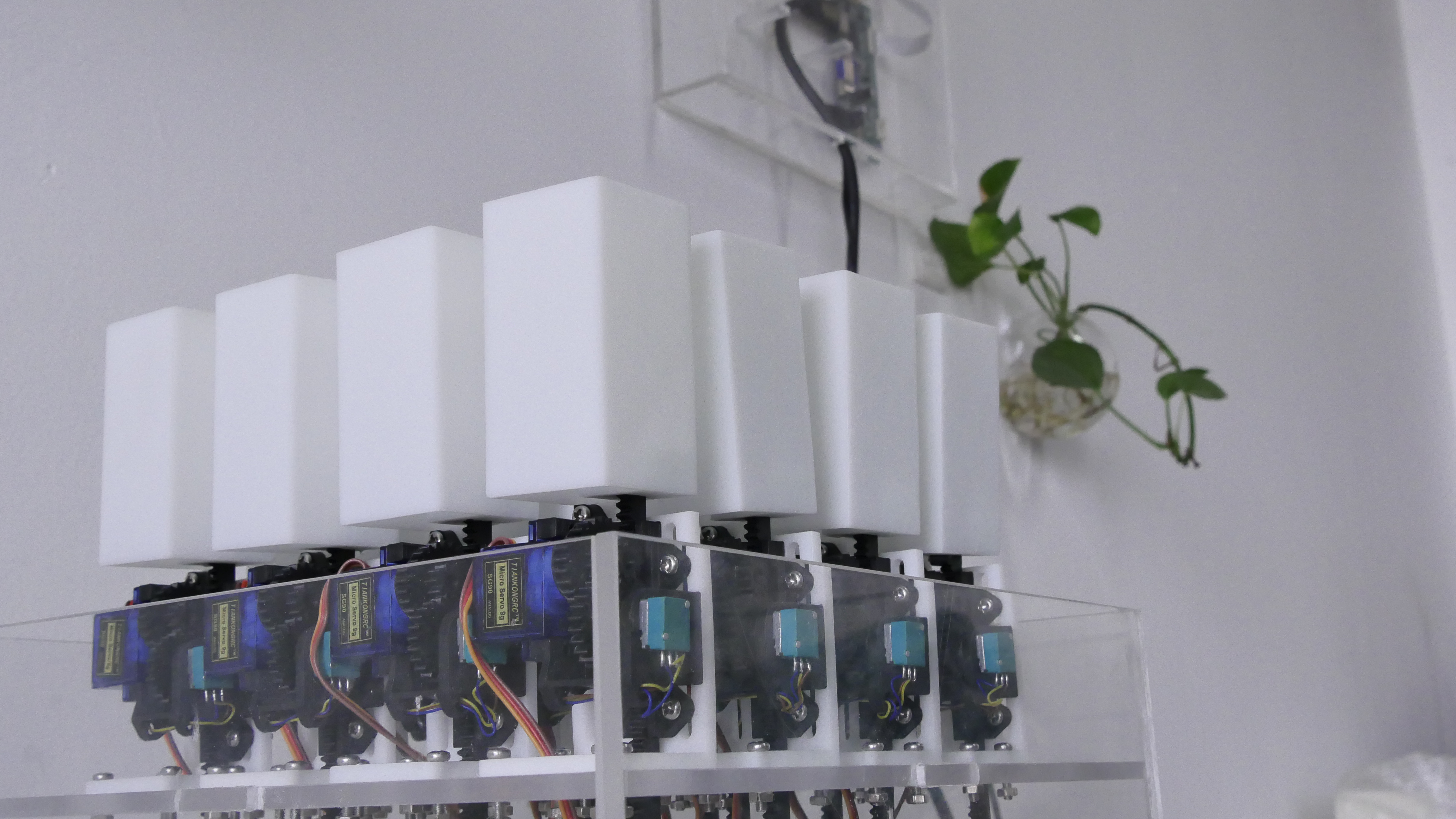
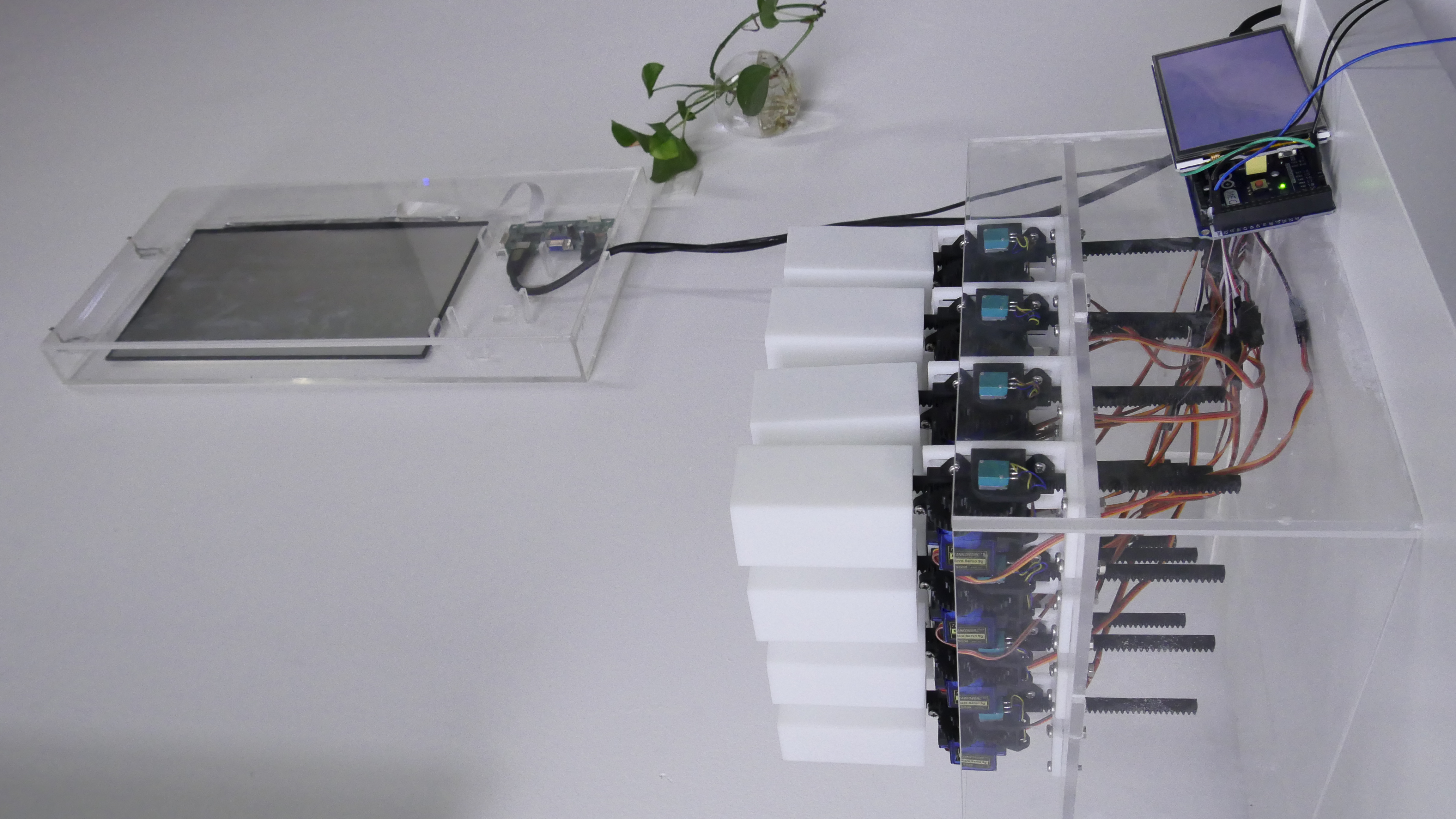
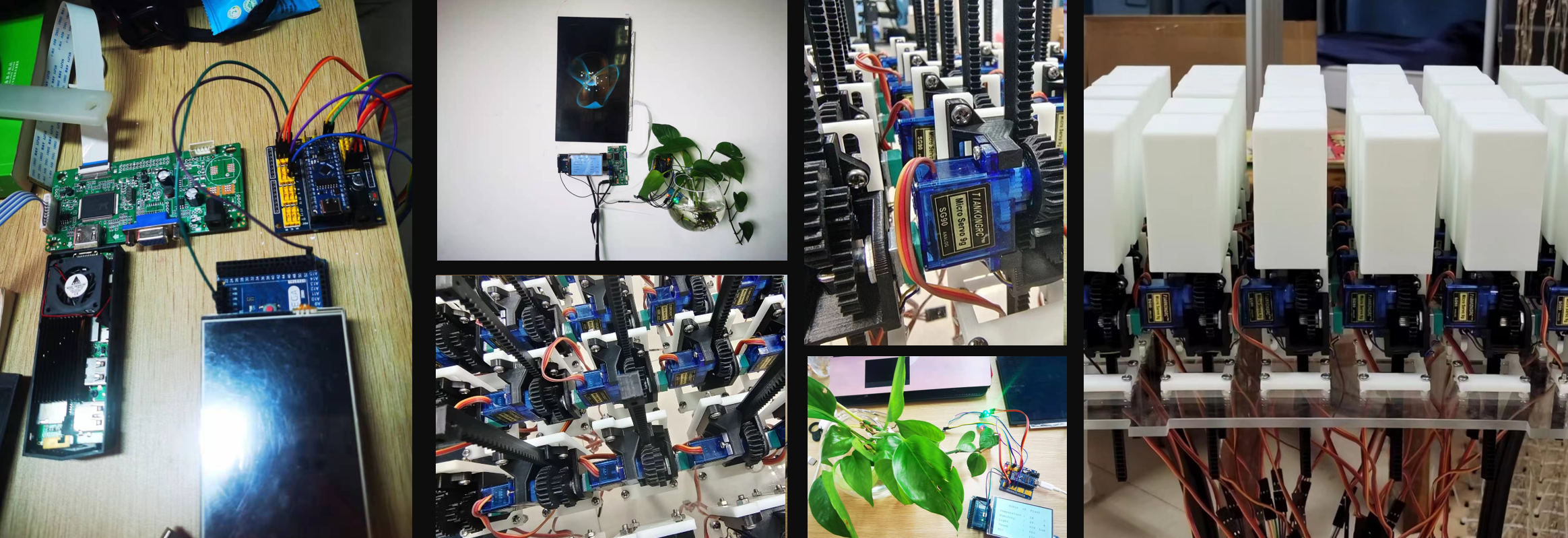
A CO₂ sensor placed near the plant captures its respiratory state. A breath sensor near the visitor captures theirs. Both data streams feed a master board that drives a digital screen and a set of servo-driven physical modules.
Visitors see plant breath rendered as flowing imagery on the screen; they hear the rhythmic mechanical breath of the modules rising and falling; they feel ambient natural sound layered over both. The accumulated effect is gentle, looping, and contagious — visitors begin to breathe with the plant without being asked to.
And in this process, the plant absorbs more of the visitor's exhaled CO₂. The two breathe each other. Co-presence becomes co-respiration.
Video
▸ Watch on YouTube
2023 · Documentation