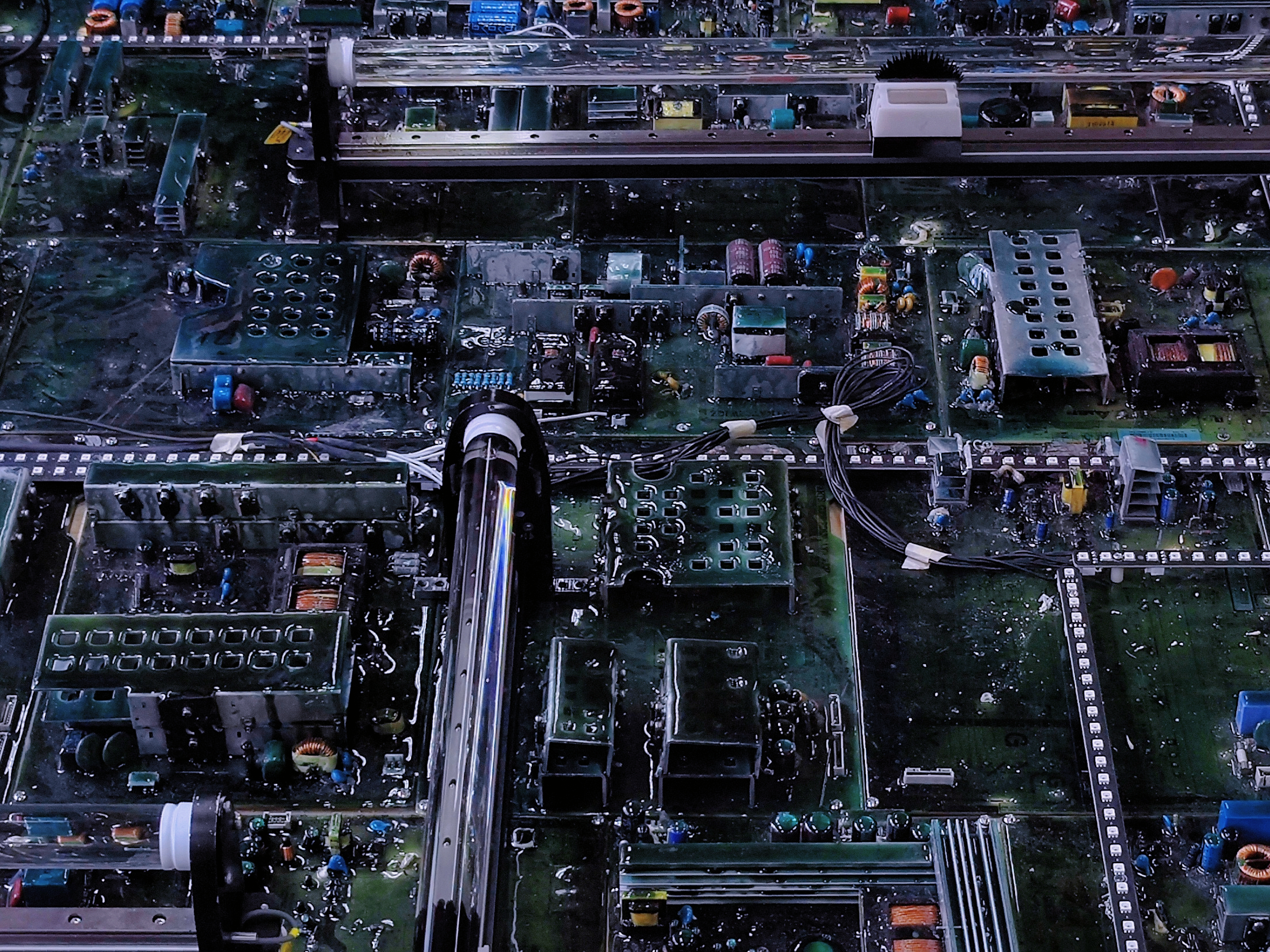
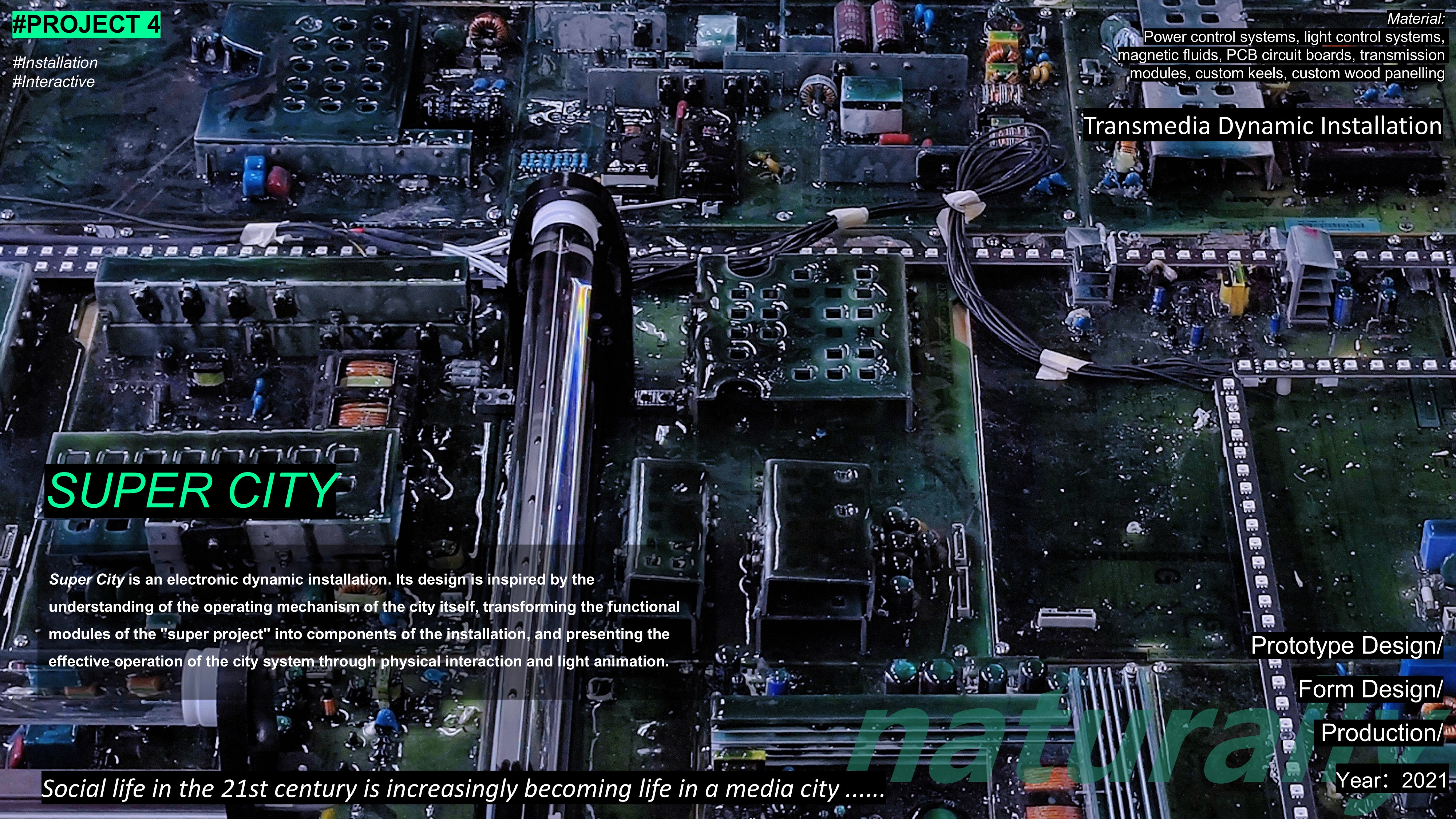
Super City
Concept
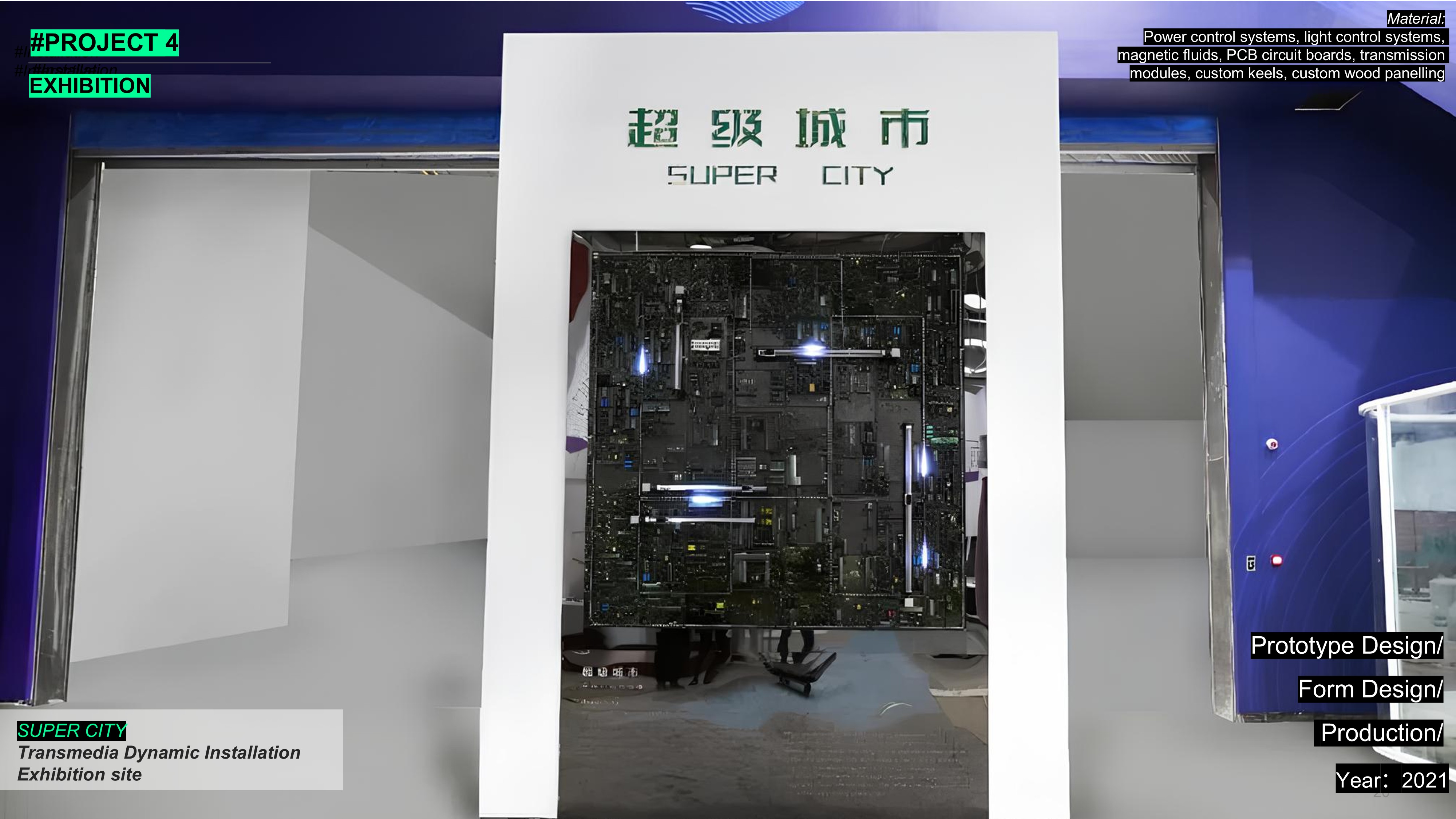
The concept of Super City extends from "Super Engineering" — the permanent exhibition at Hubei Provincial Science and Technology Museum. A super city is the most complex artefact on Earth: countless systems silently sustain its operation, and yet those of us within it rarely sense their effort.
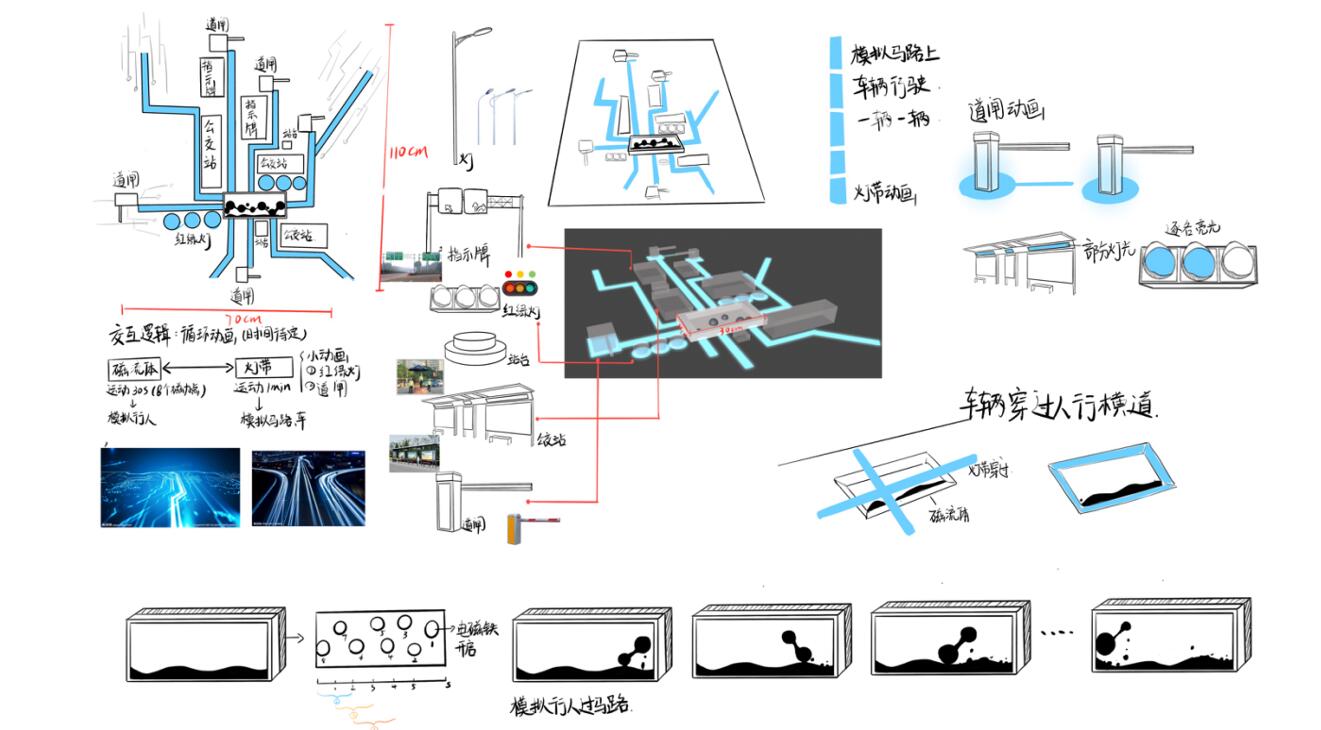
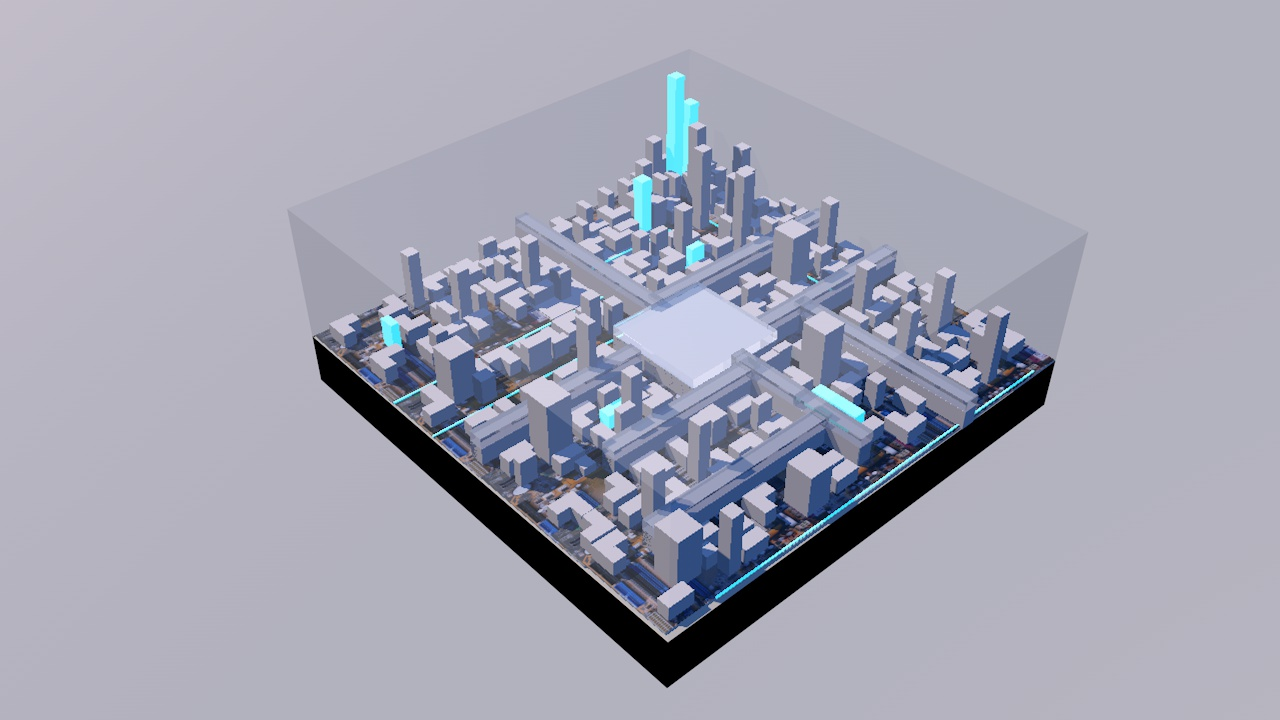
While the "Super Engineering" hall asks how vast urban projects work, our Super City installation reframes the question. The existence and evolution of a city is here understood as a mutual construction between human and non-human actors. Using human-introduced electronic components and our understanding of urban operating mechanisms, we translate the city's functional modules into components of an installation — its operation made visible through physical interaction, light animation, and the motion of magnetic fluids.
Two Forms of Display
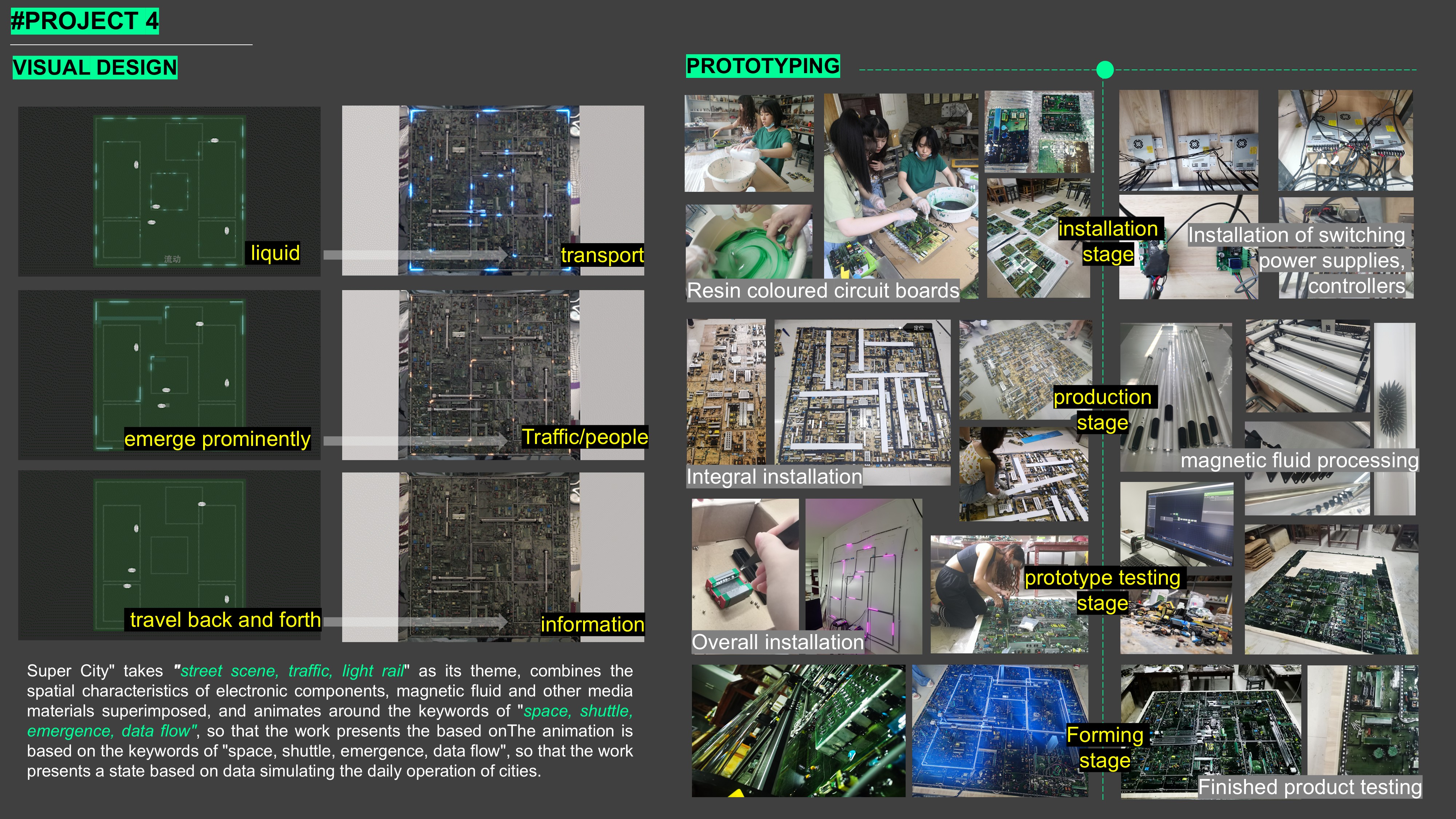
The work runs through two visual languages — light, and magnetic fluid. The data's own algorithm becomes the visual medium, and through the changes of light and the motion of magnetic fluid, a dialogue between human and machine is completed.
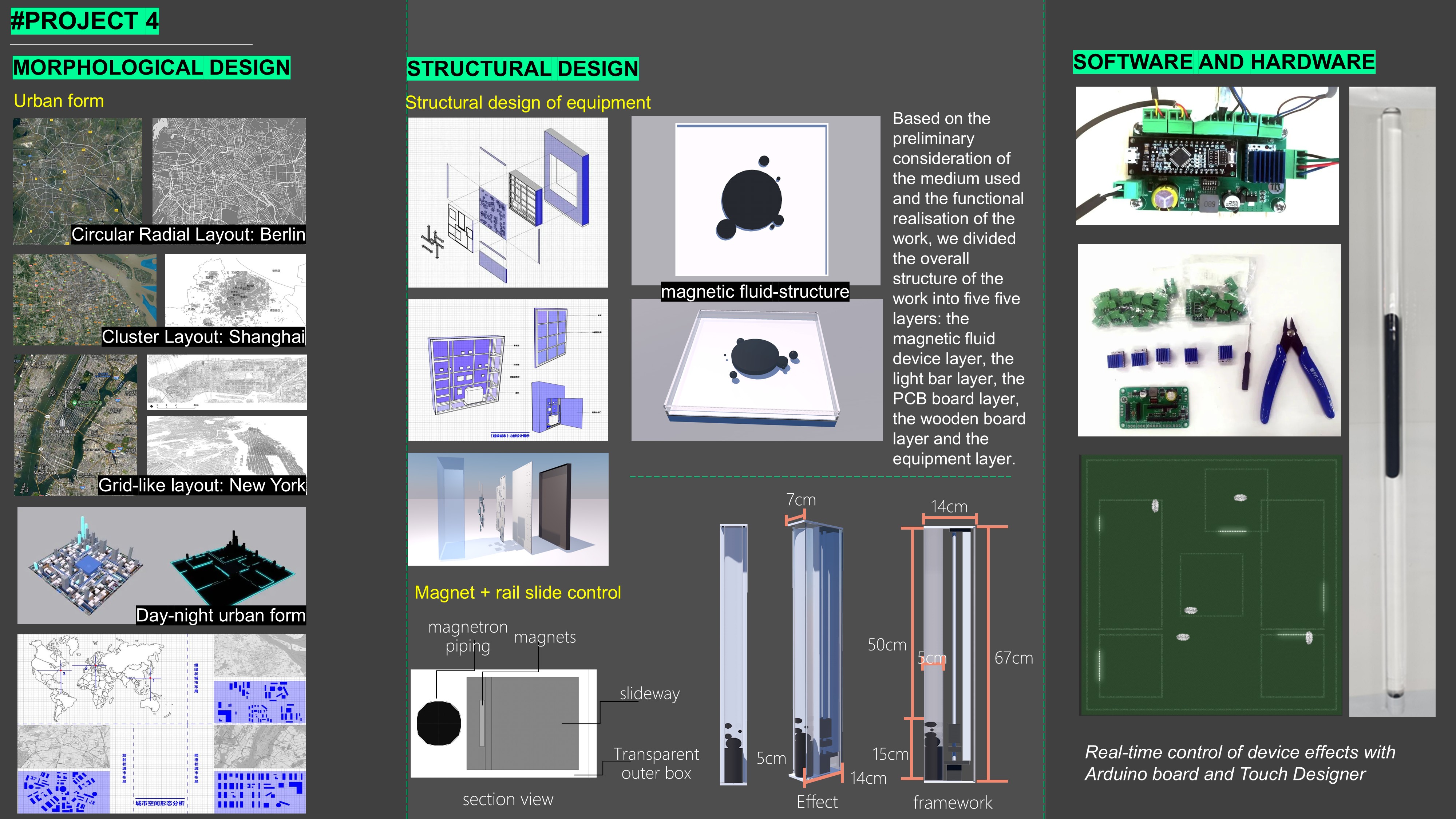
Technology is the key that realises this logic. Through a combination of software and hardware, Super City achieves real-time control over the dynamic installation.
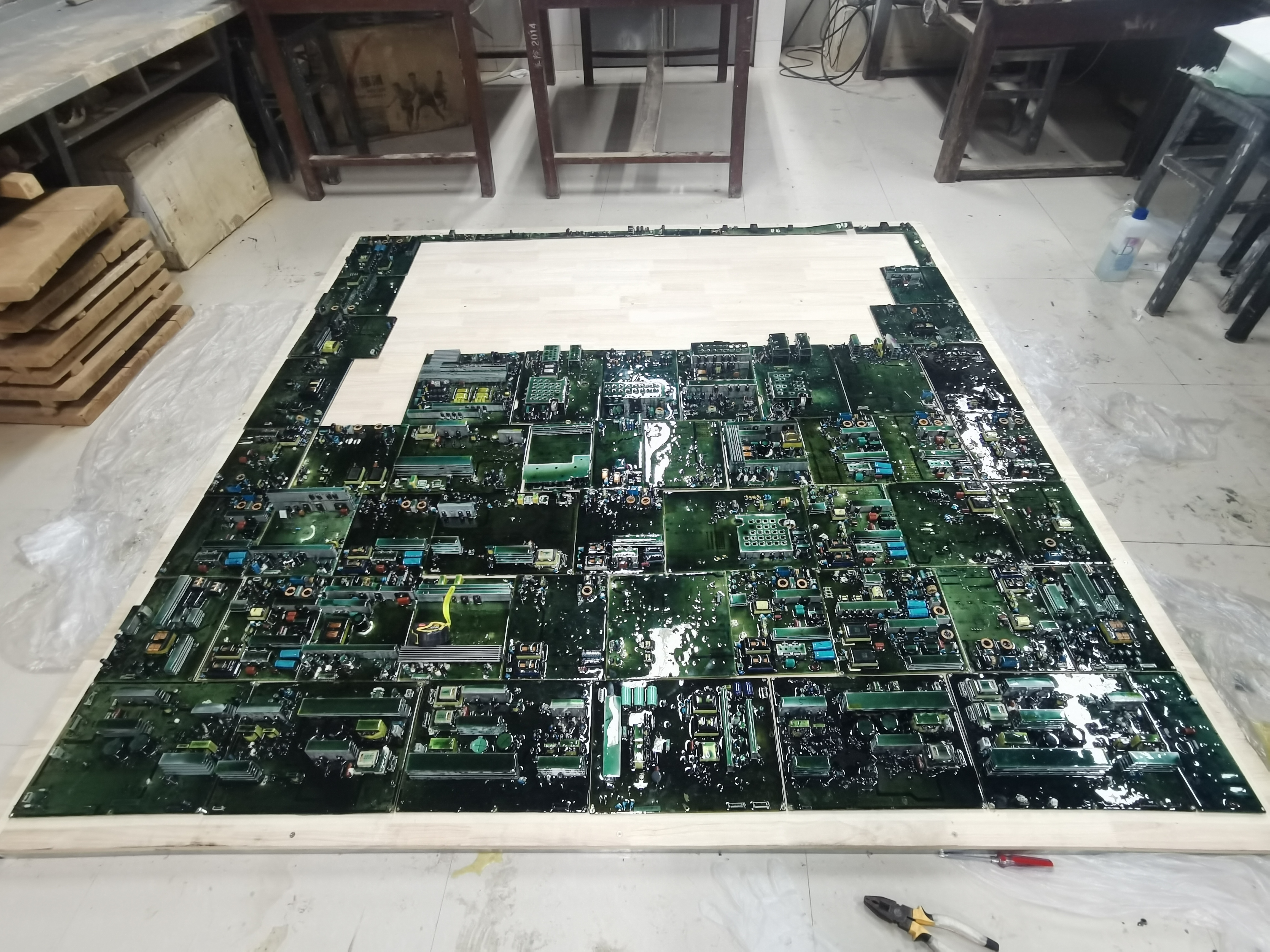
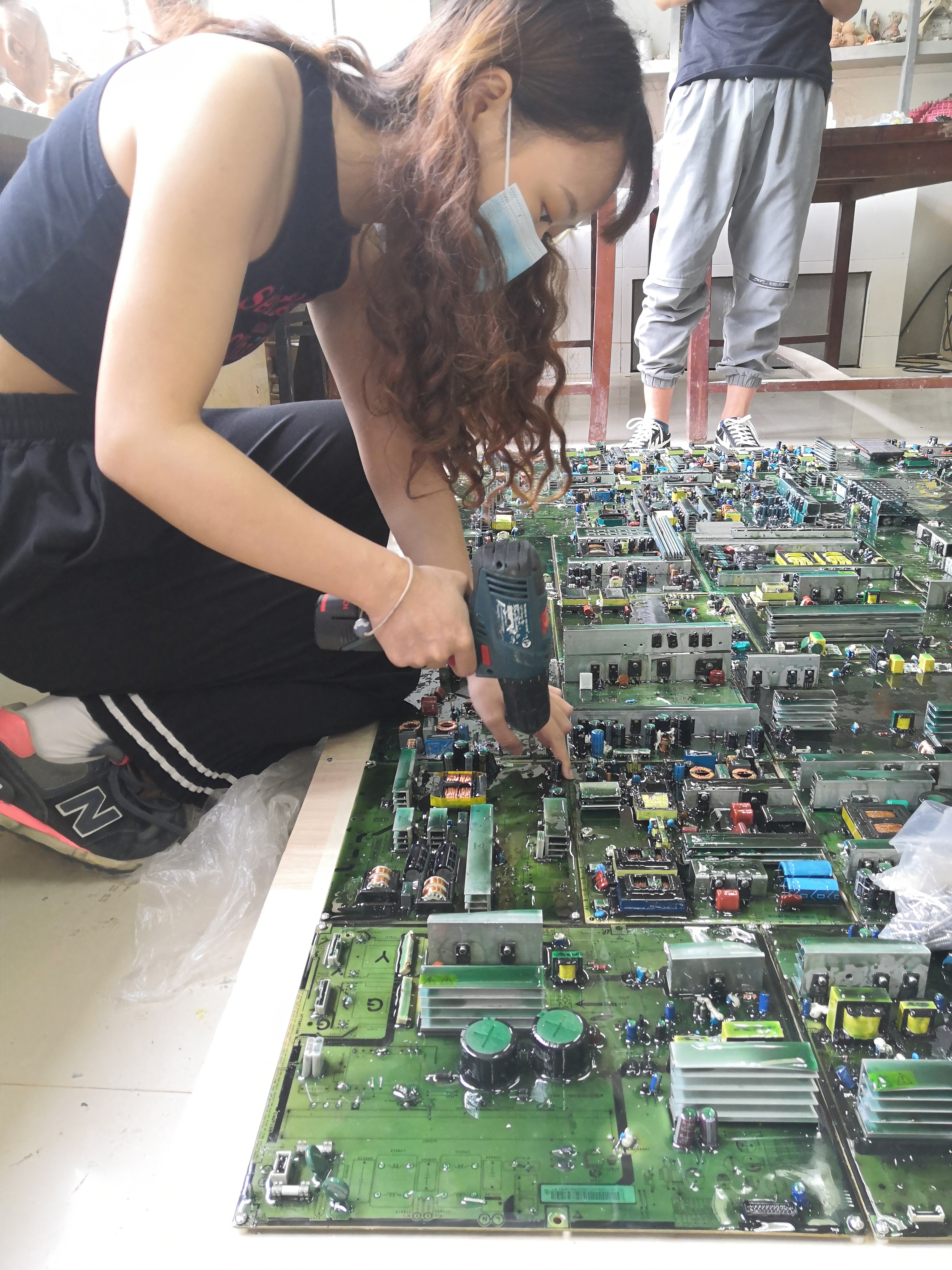
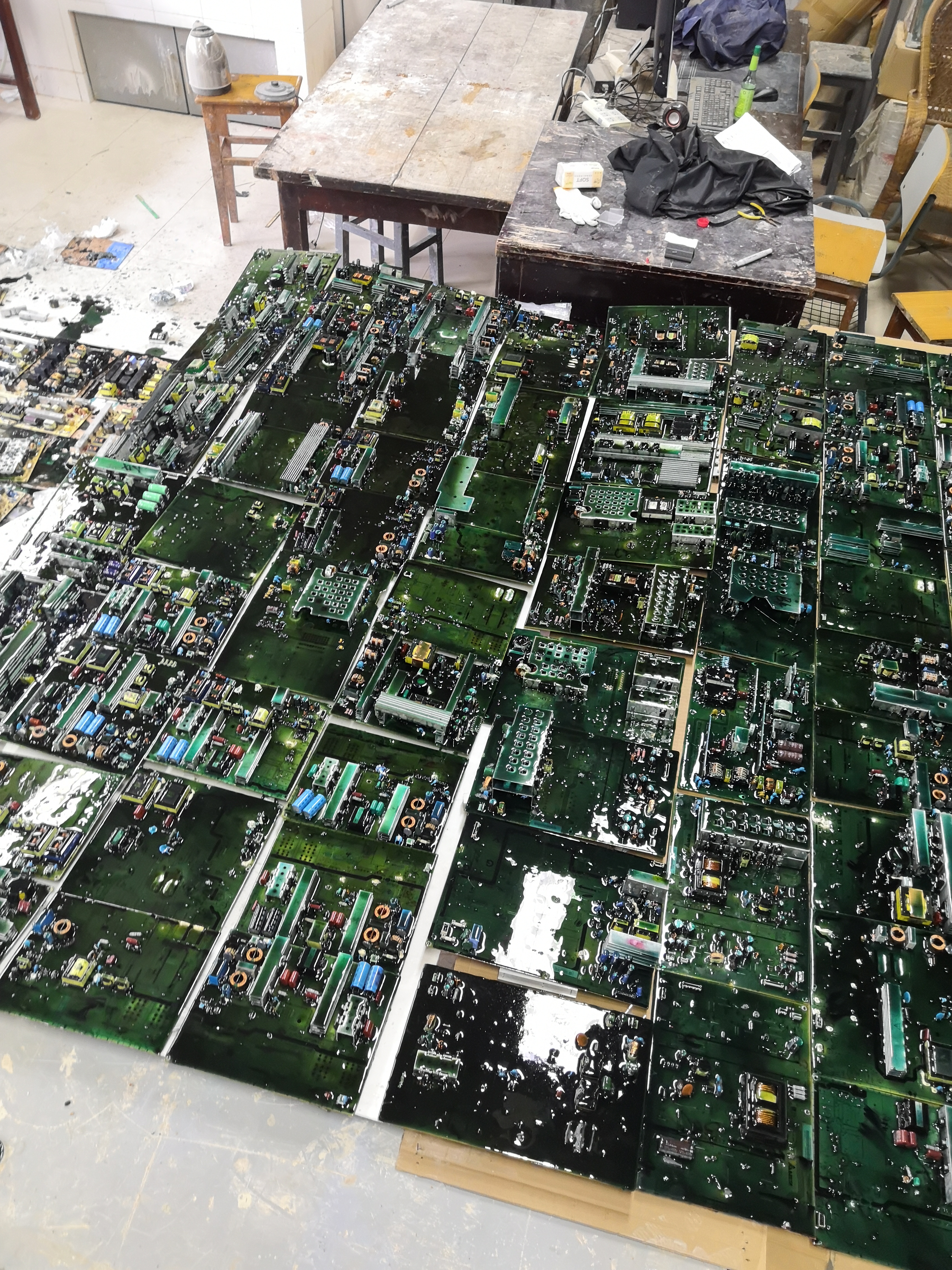
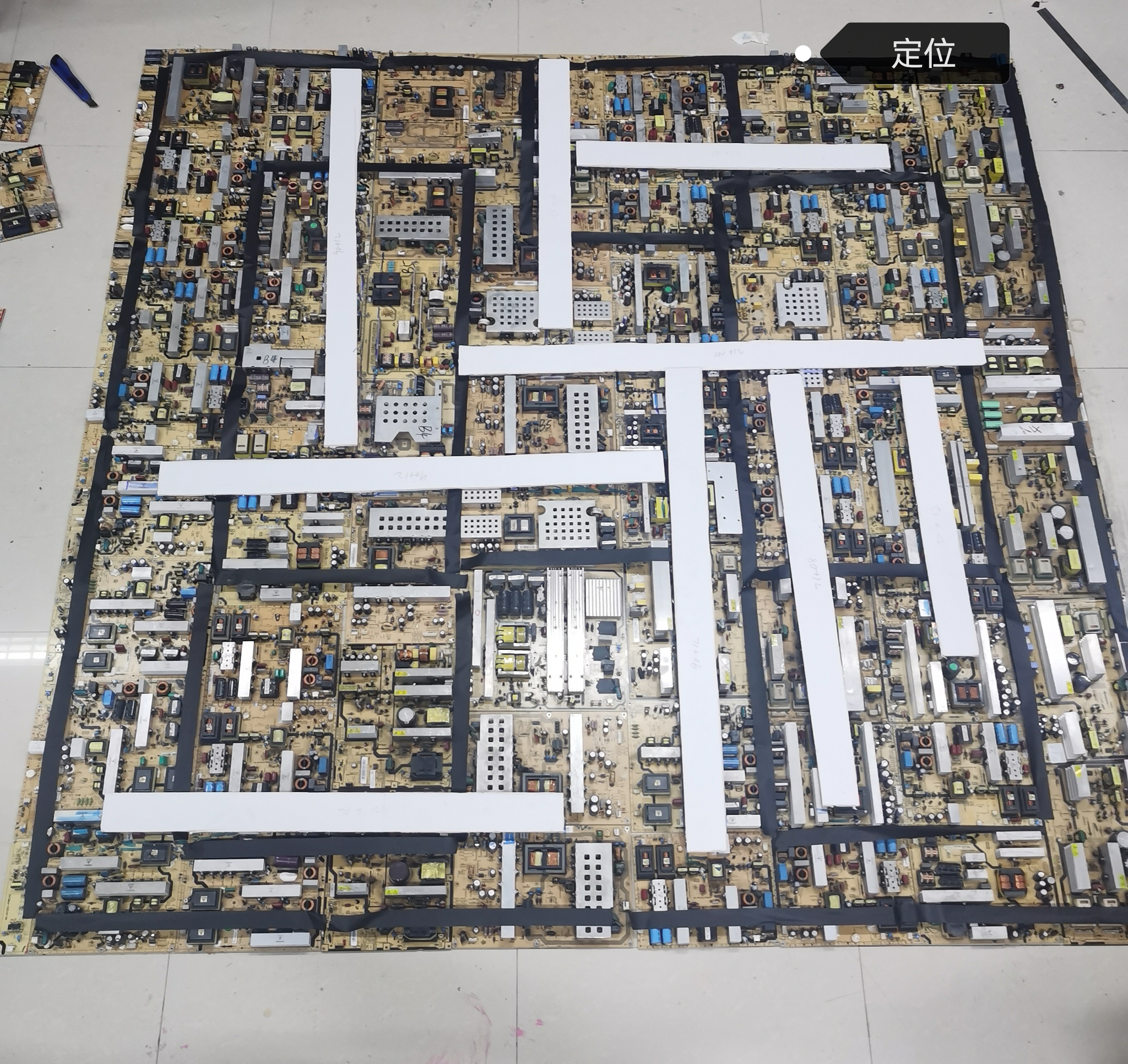
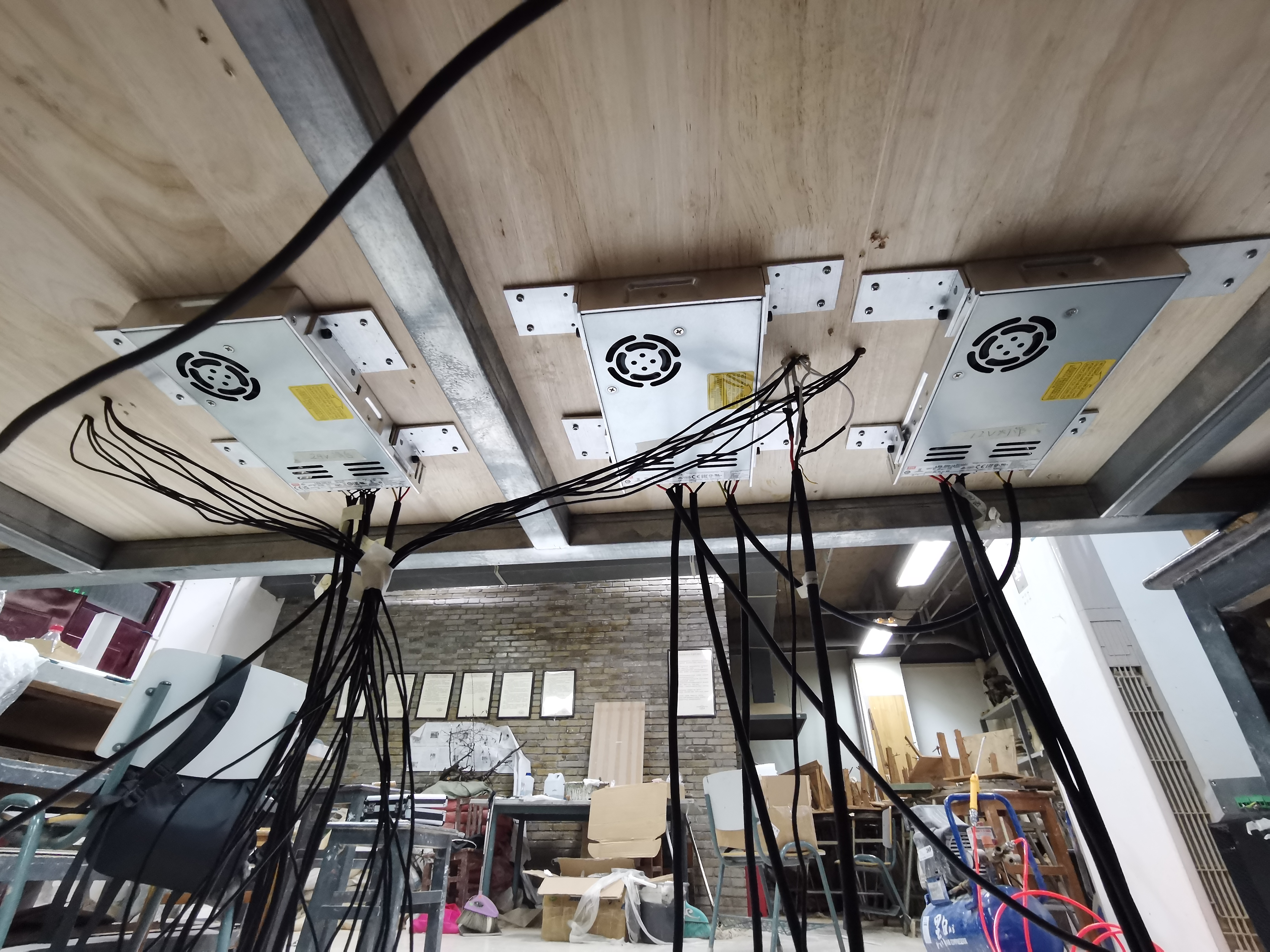
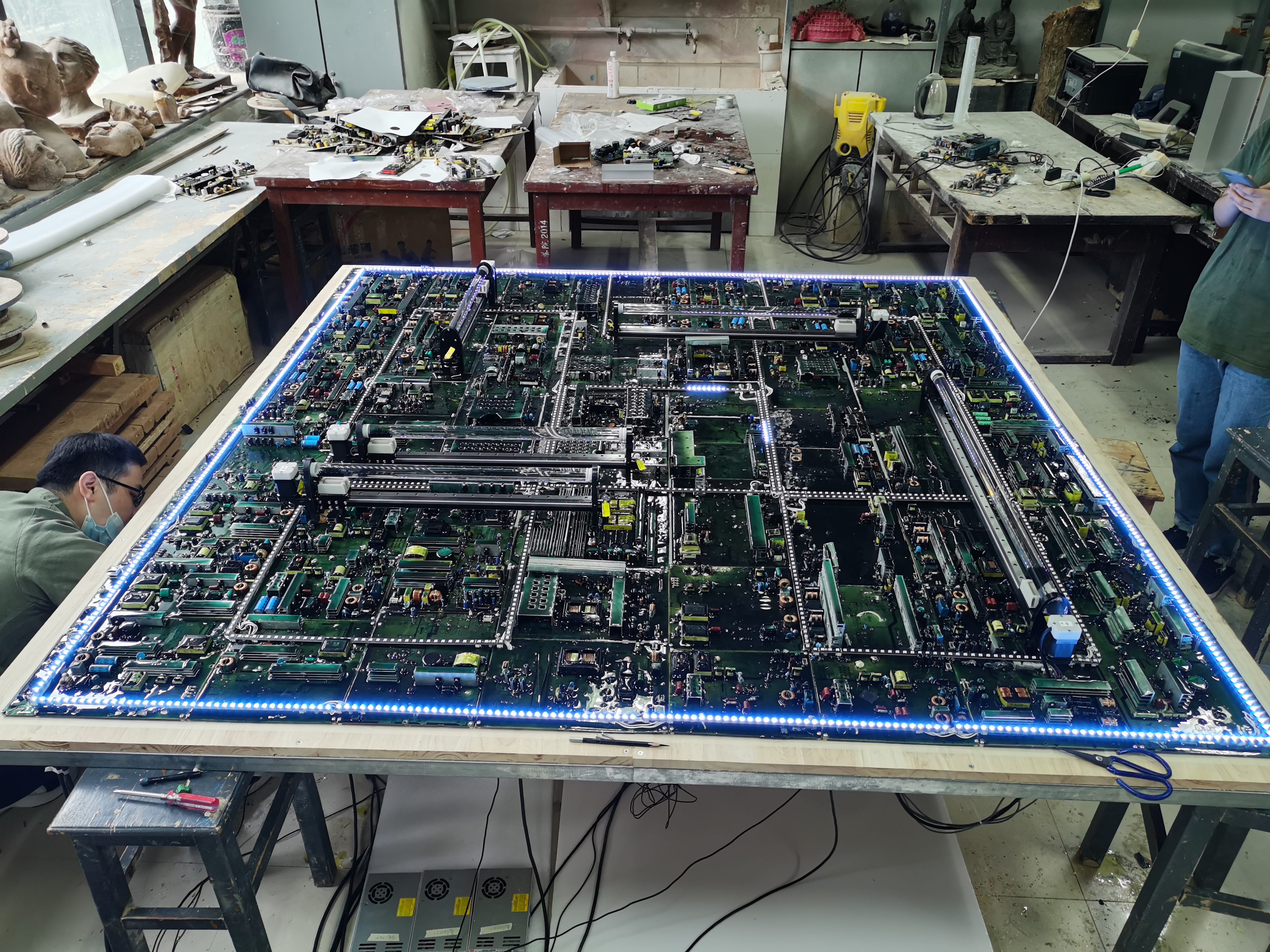
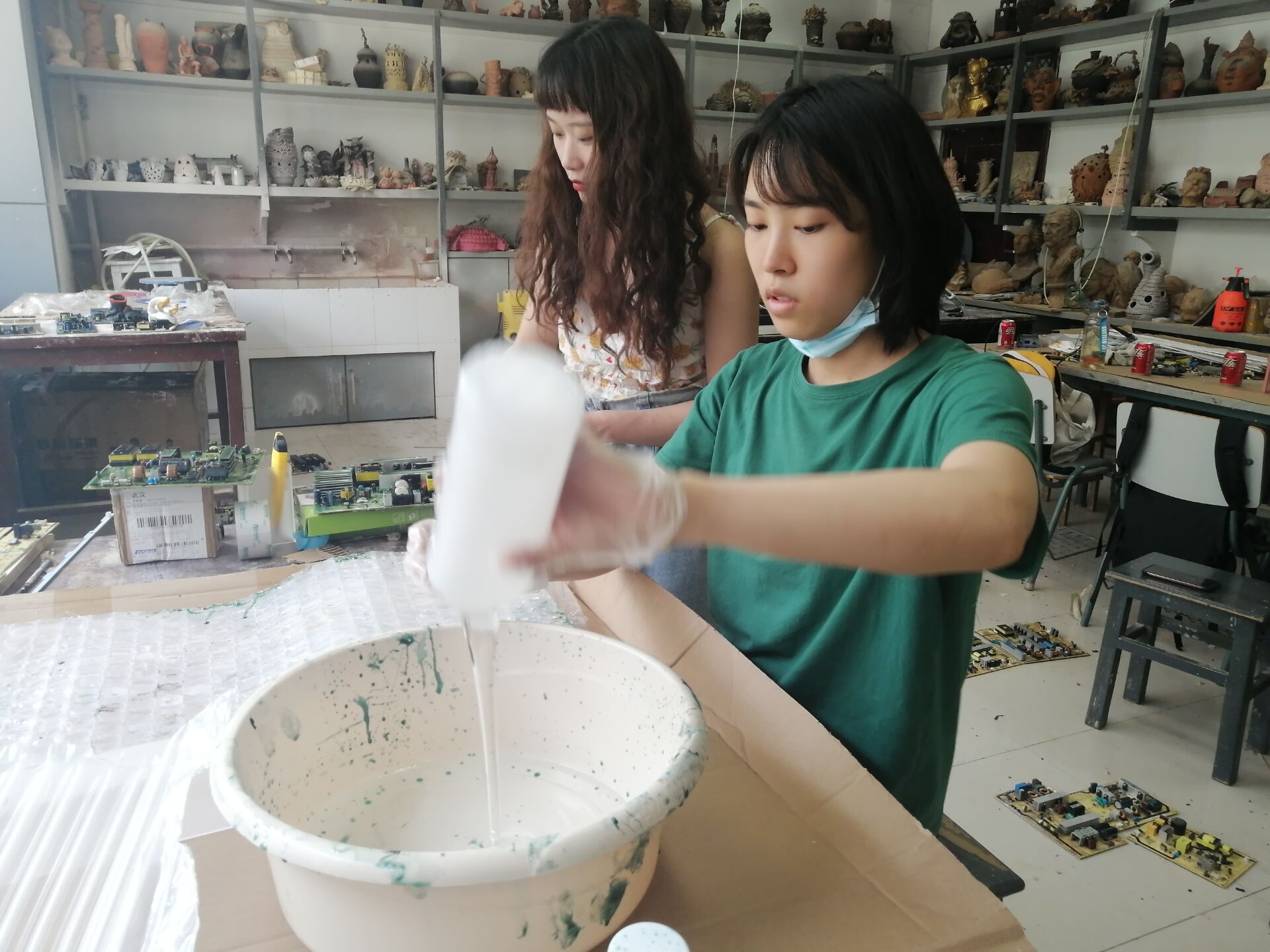
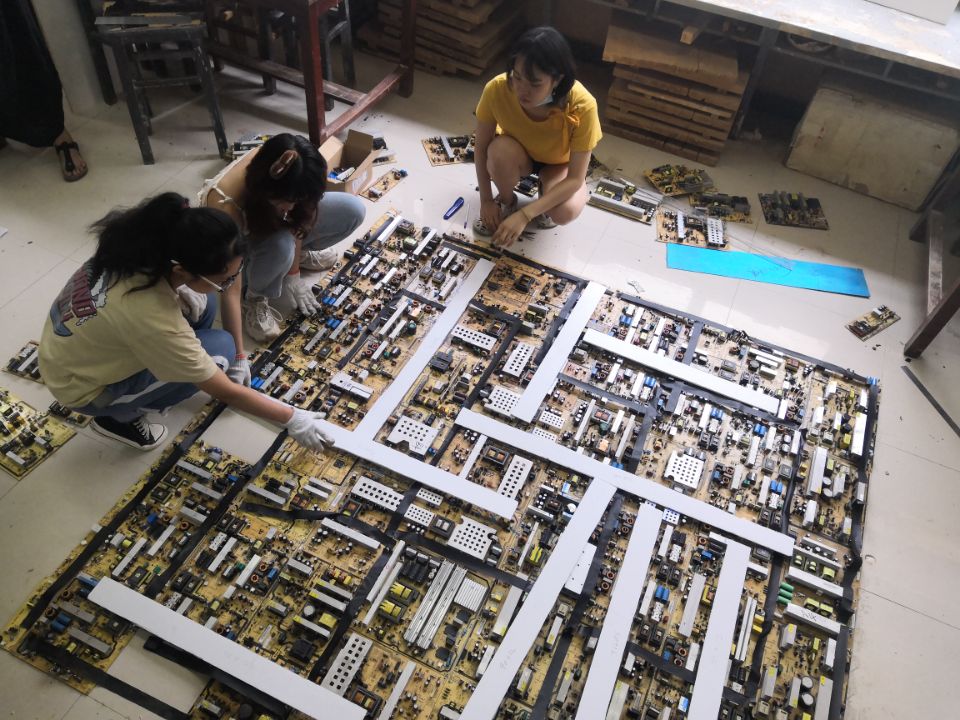

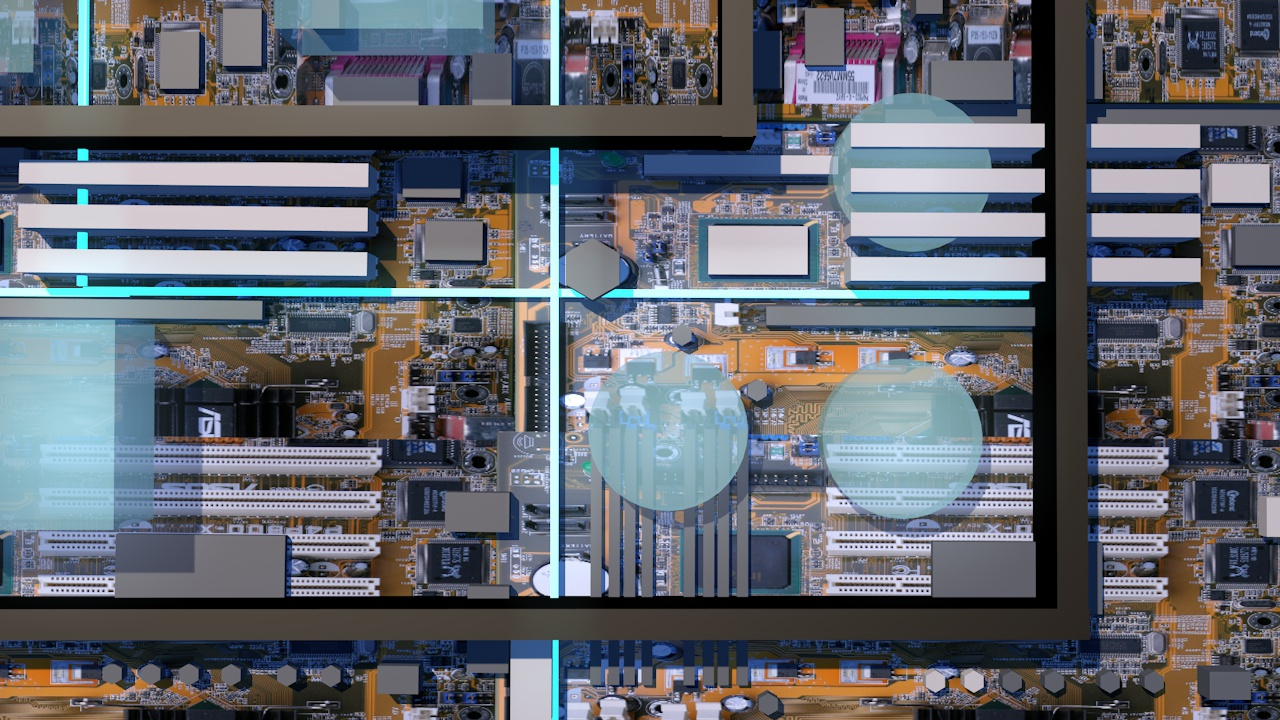
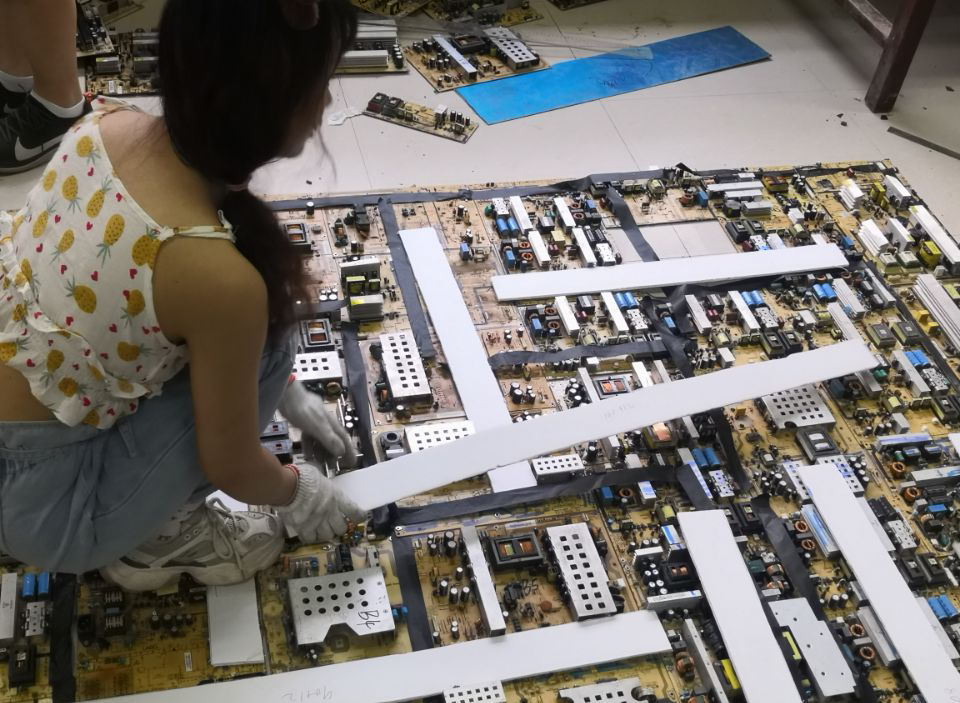
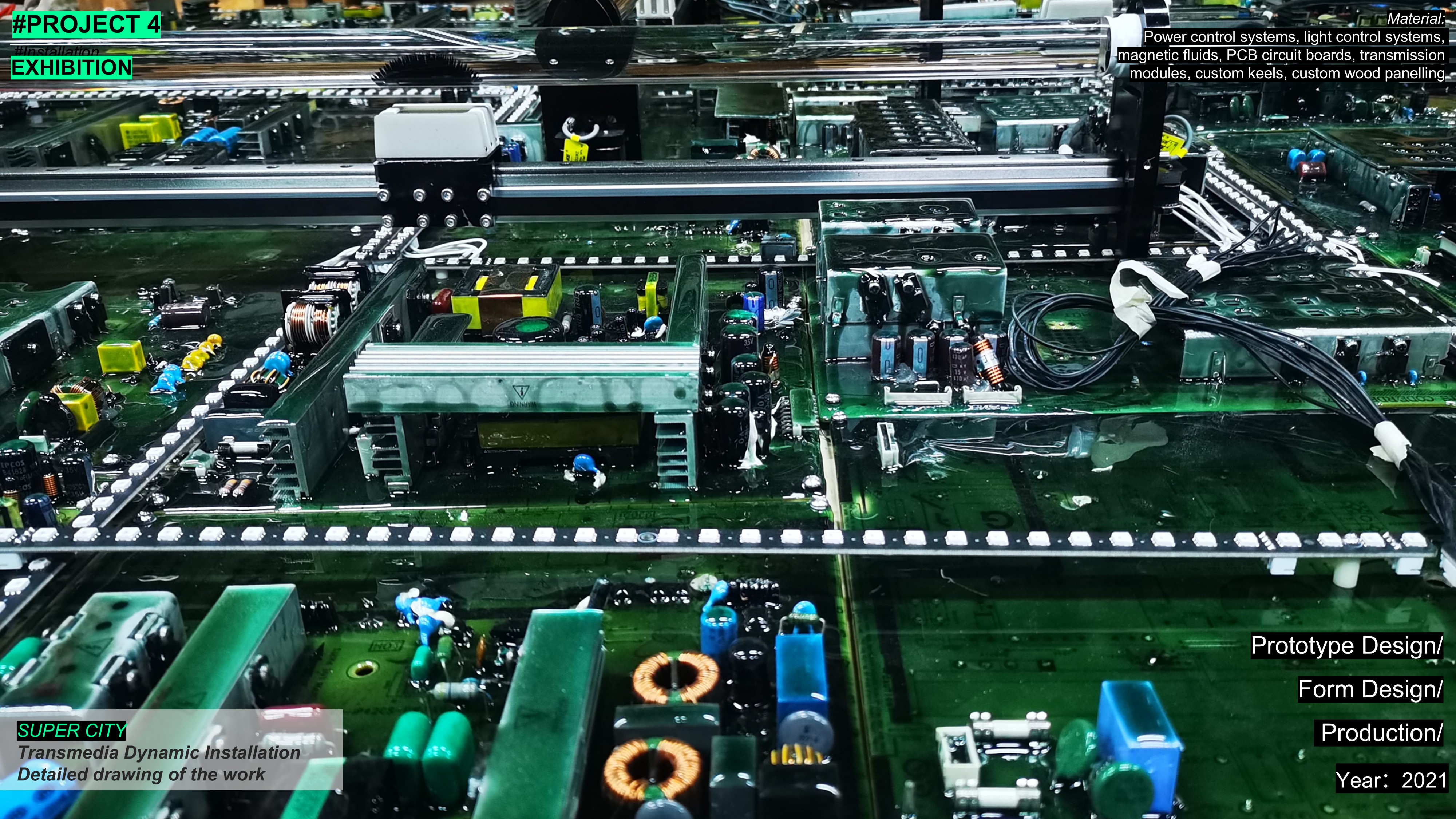
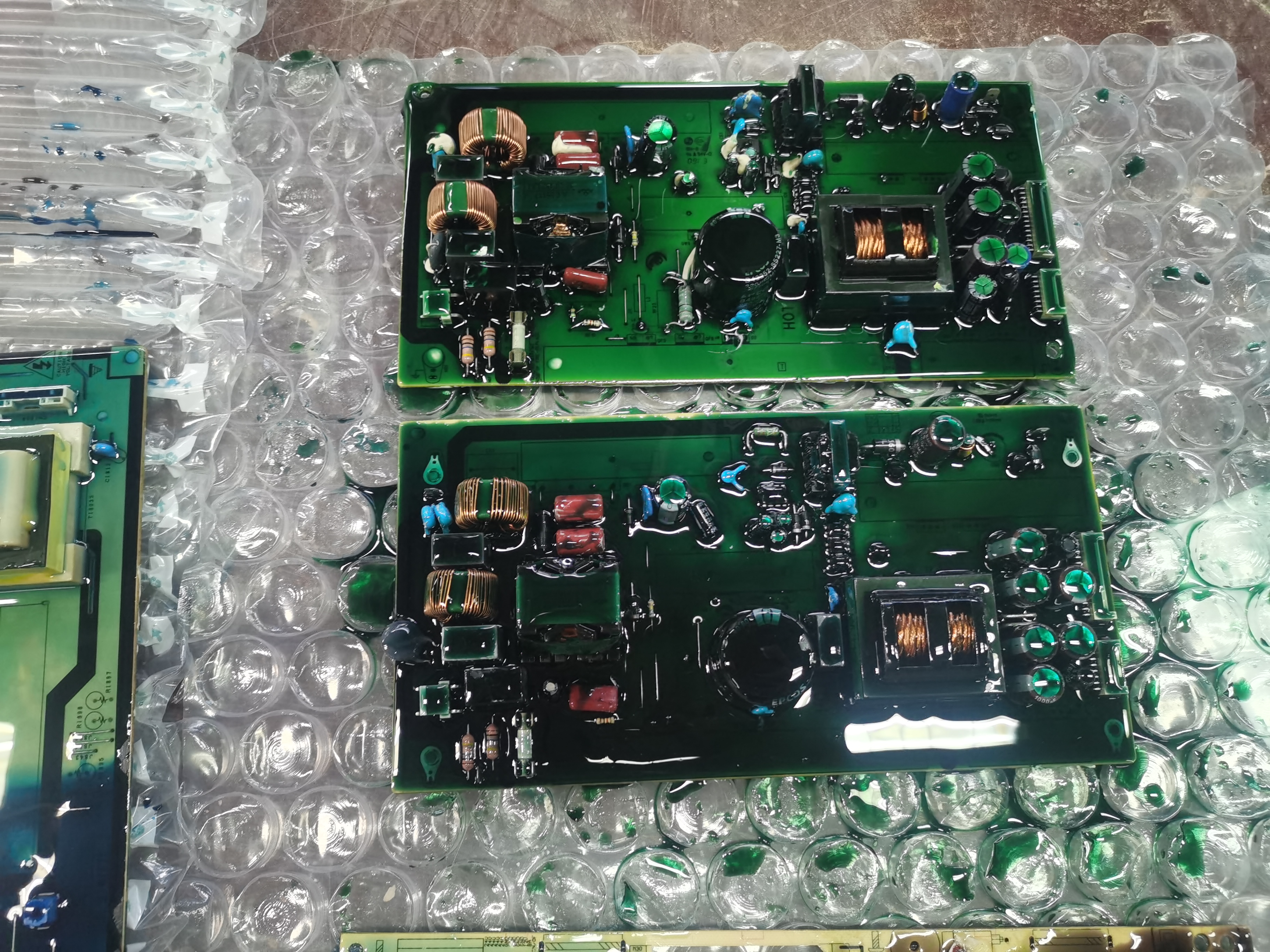
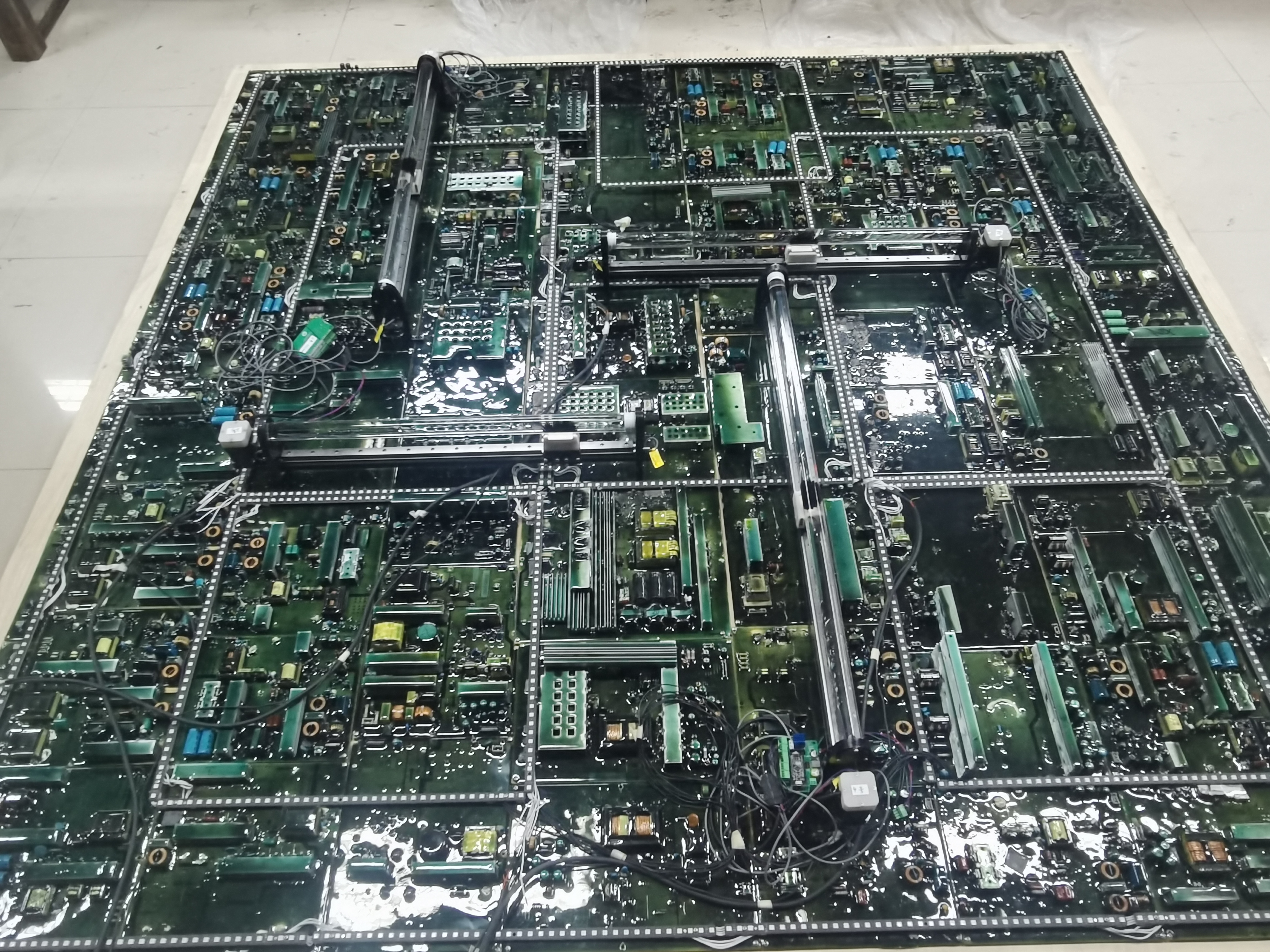
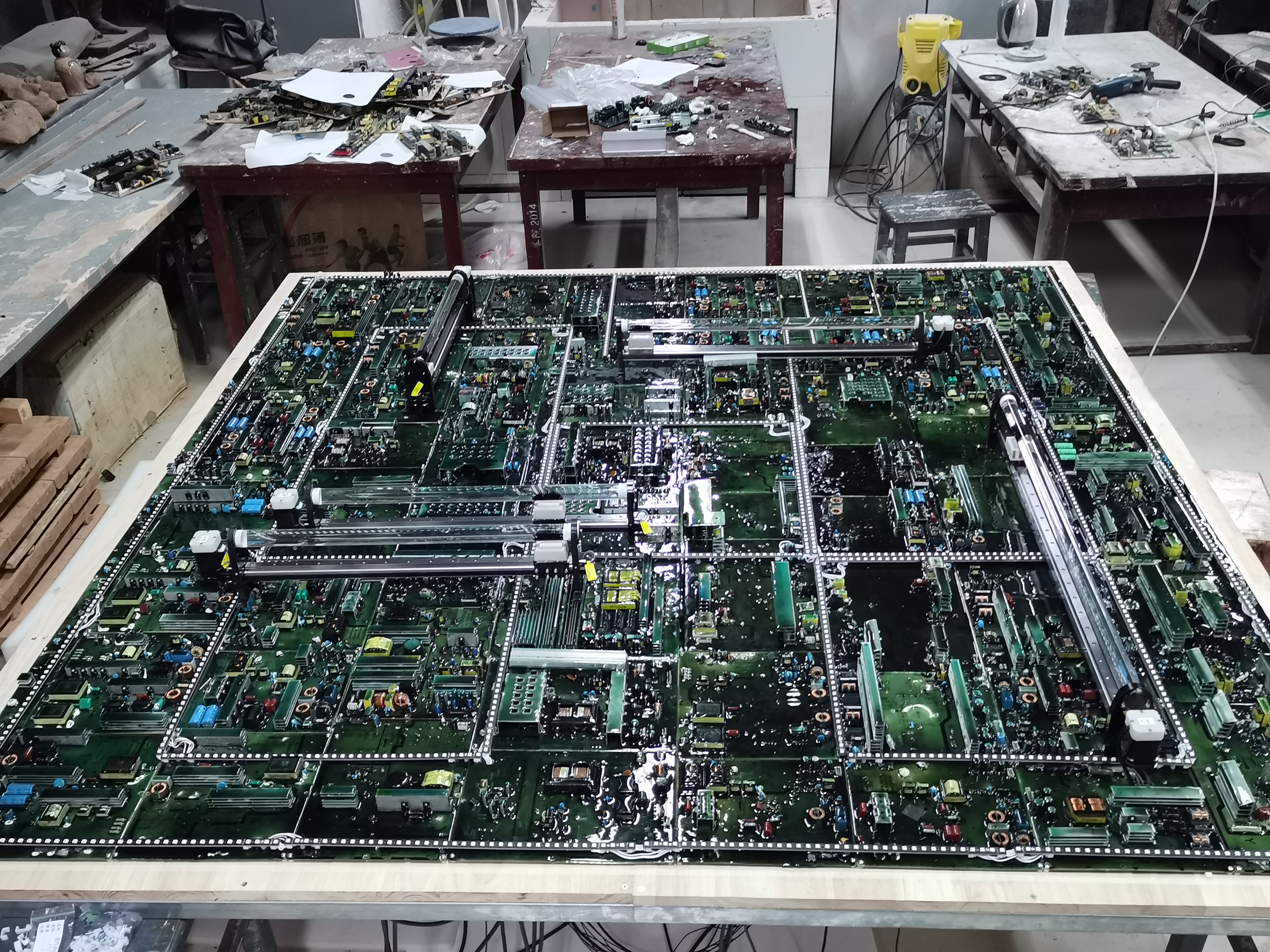
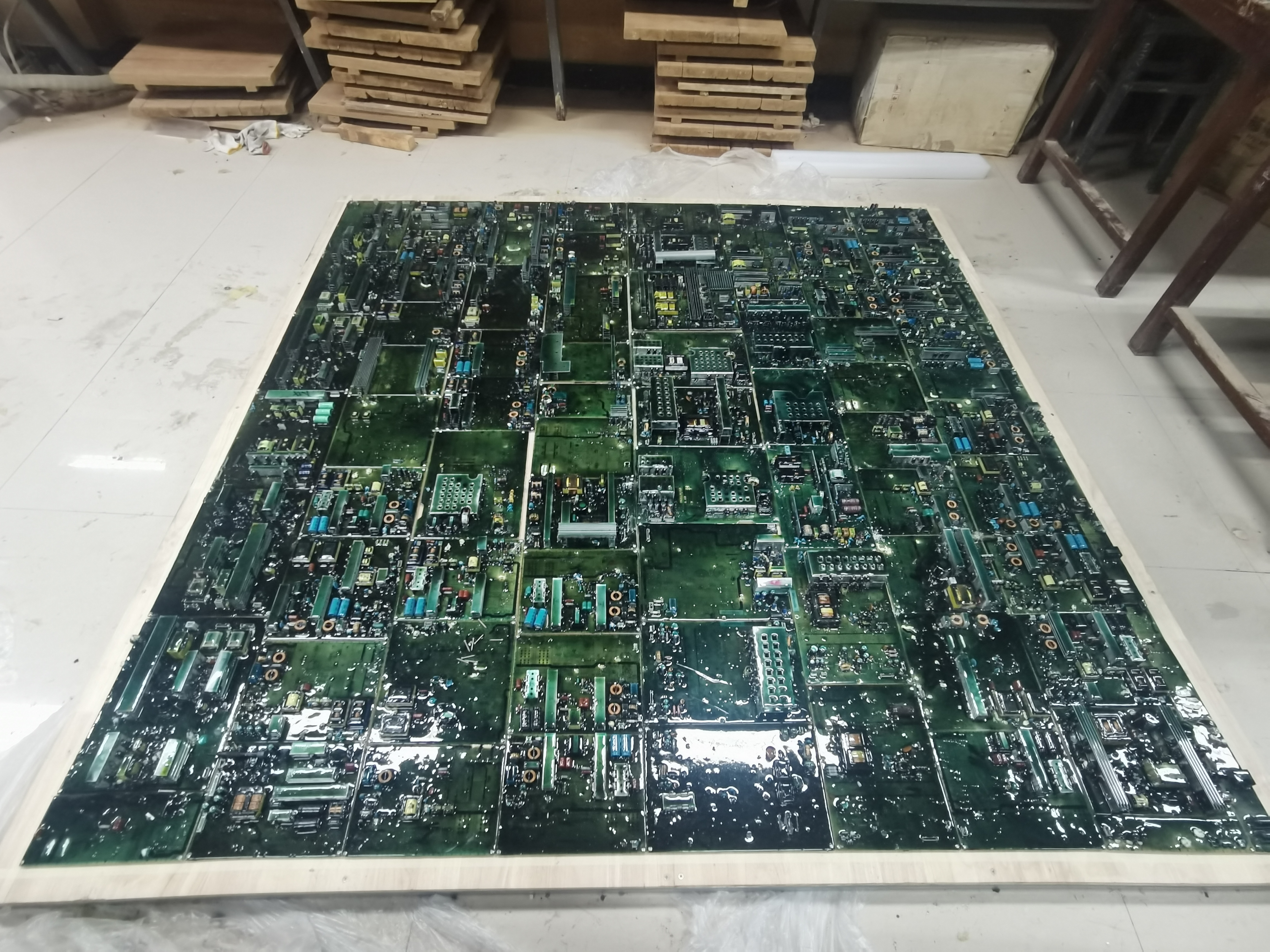
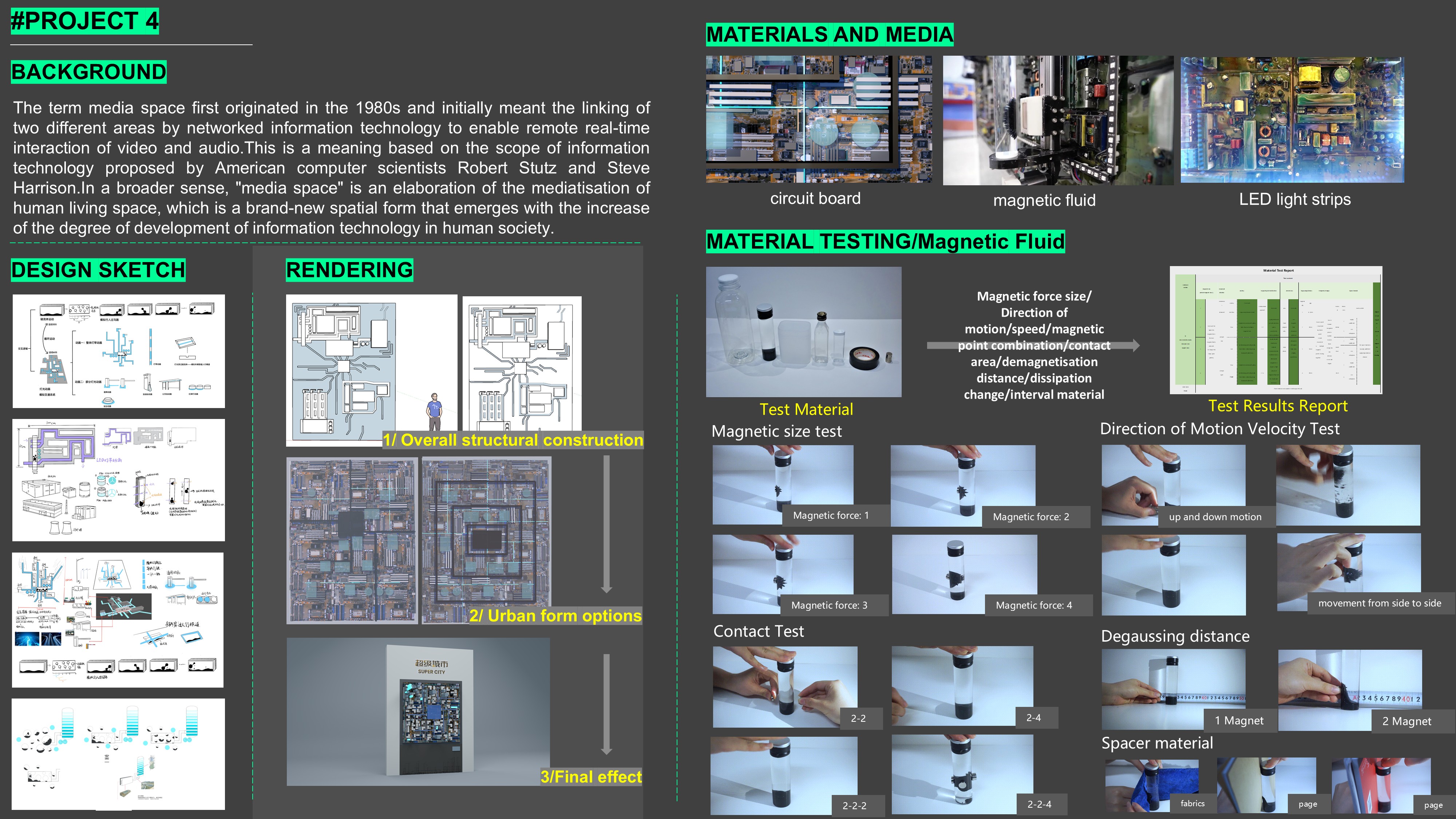
During design, we explored displays and acrylic models as the visual modules. In the final production, we chose PCB boards, LED light strips, and magnetic fluids as the primary visual elements.
The Logic Beneath
The visual creation runs on TouchDesigner — a node-based real-time visual programming environment for new-media work. As a transmedia dynamic installation, Super City achieves software-hardware interconnection: Arduino boards transmit data, the DMX protocol bridges software to hardware, and TouchDesigner controls the installation in real time.
The magnetic fluid module is built from fluid tubes, lead-screw slides, servo motors, magnets, Arduino boards, and aluminium fittings. Each motor is uniquely numbered so it can be addressed individually — TouchDesigner then choreographs motion speed, timing, and the relative position of fluid in each tube.
Close-up
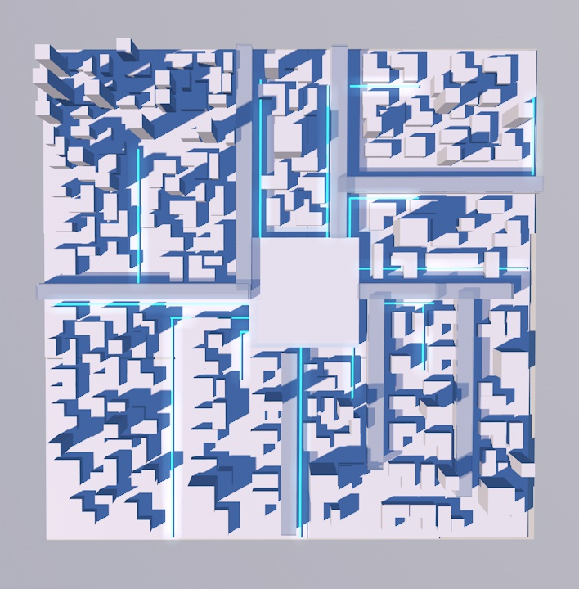
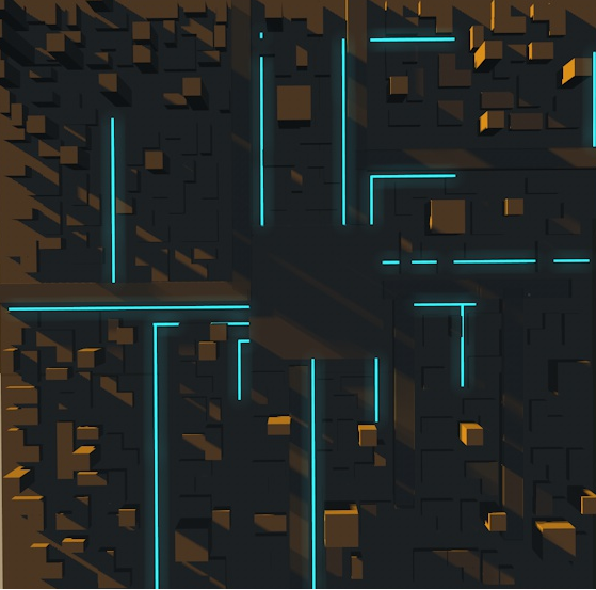
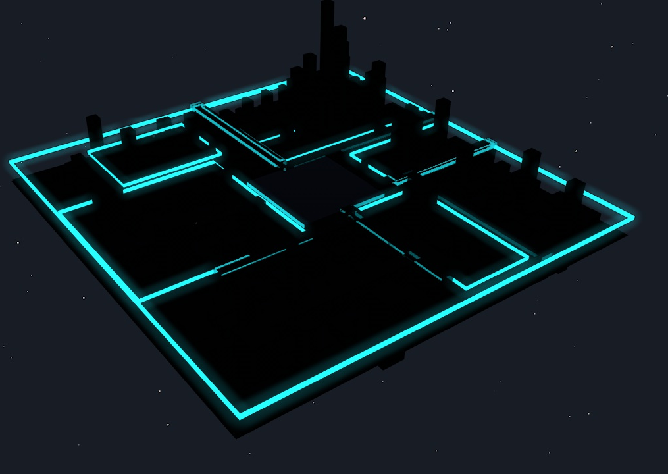
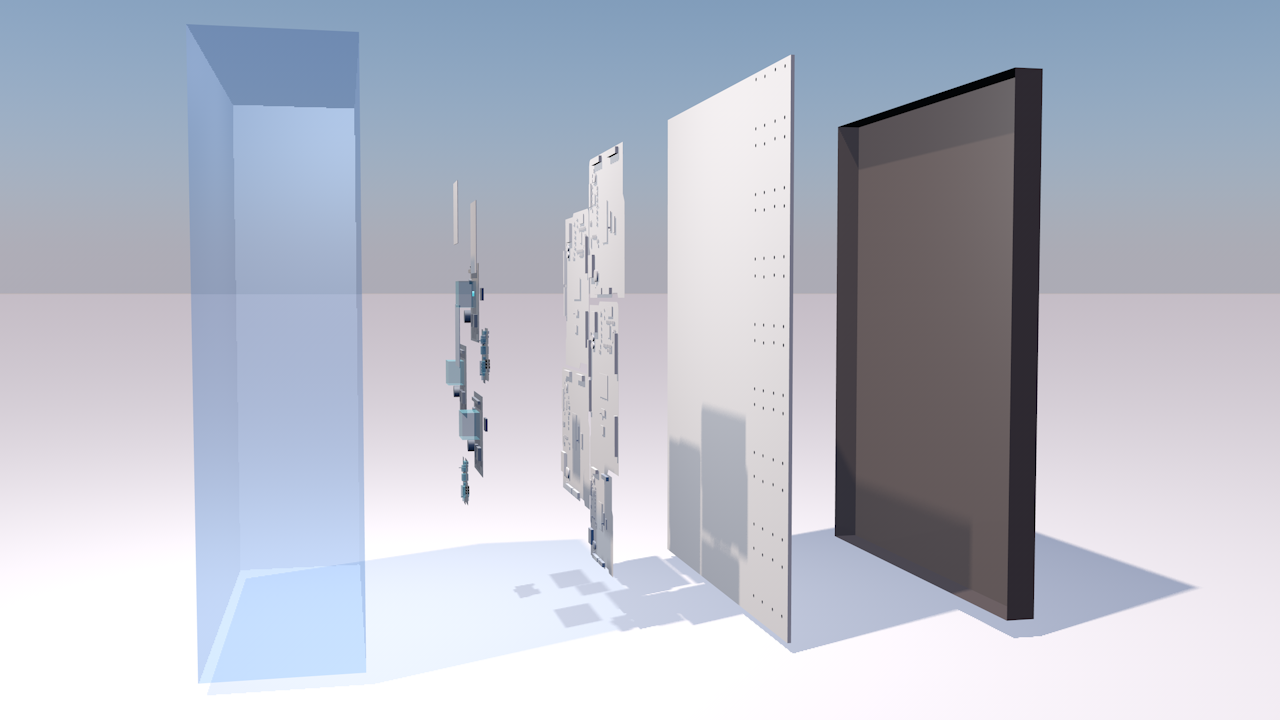
From the sketch, to the iterative form-finding, to the final structural mock-up: the installation evolved through dozens of intermediate stages. Below, a sample of the development process.